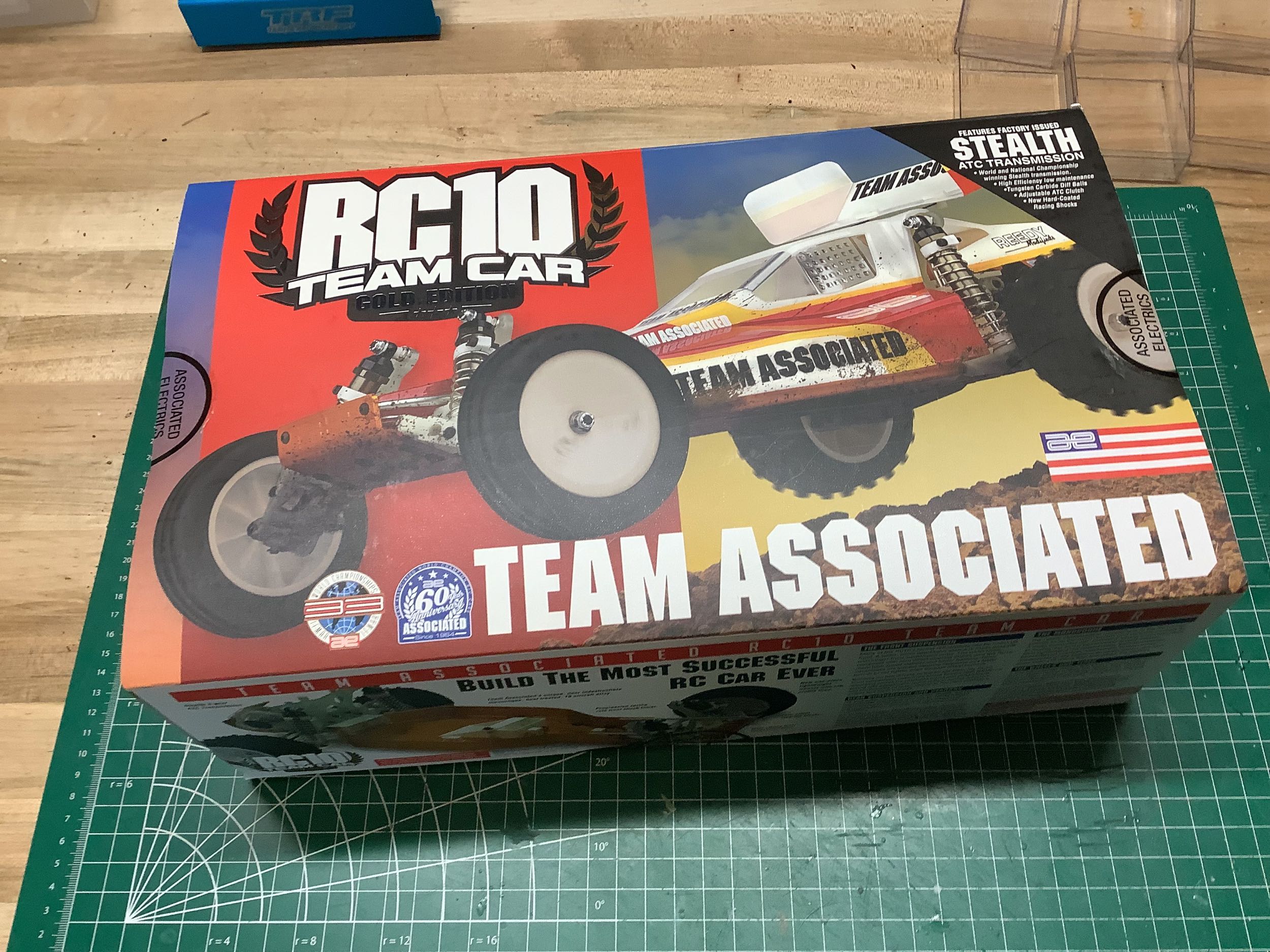
Associated RC10 Team Project
Page 1: Assembly
I've built the RC10 Classic previously and documented it in excruciating detail. This one is
nearly identical so I've only written about the differences here. Please
see my RC10 Classic for full build details.
The Team Car comes in the same sized small rectangular box and the other
RC10 products I've built. Inside are labelled bags which are used
in sequence during the build process.
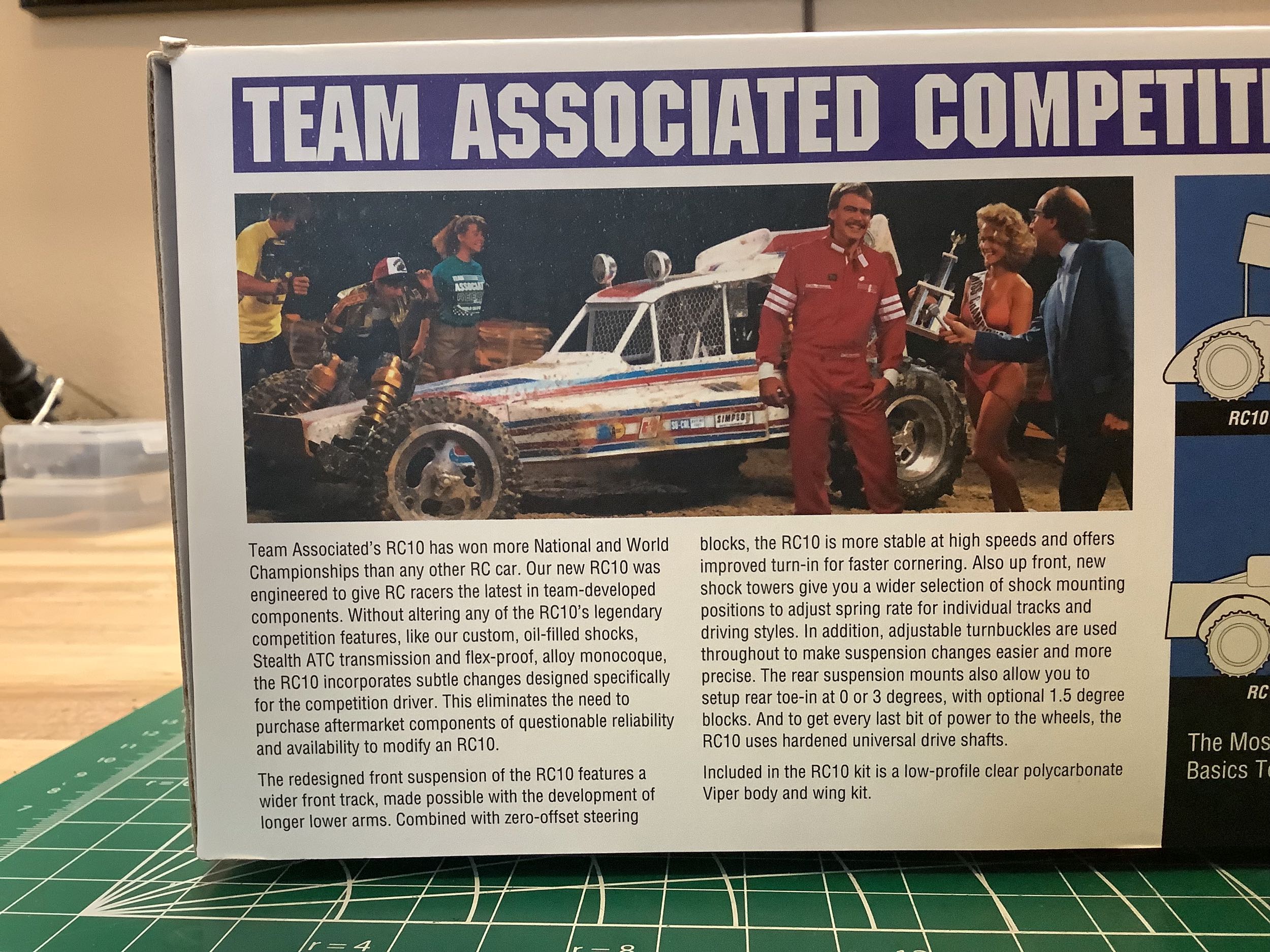
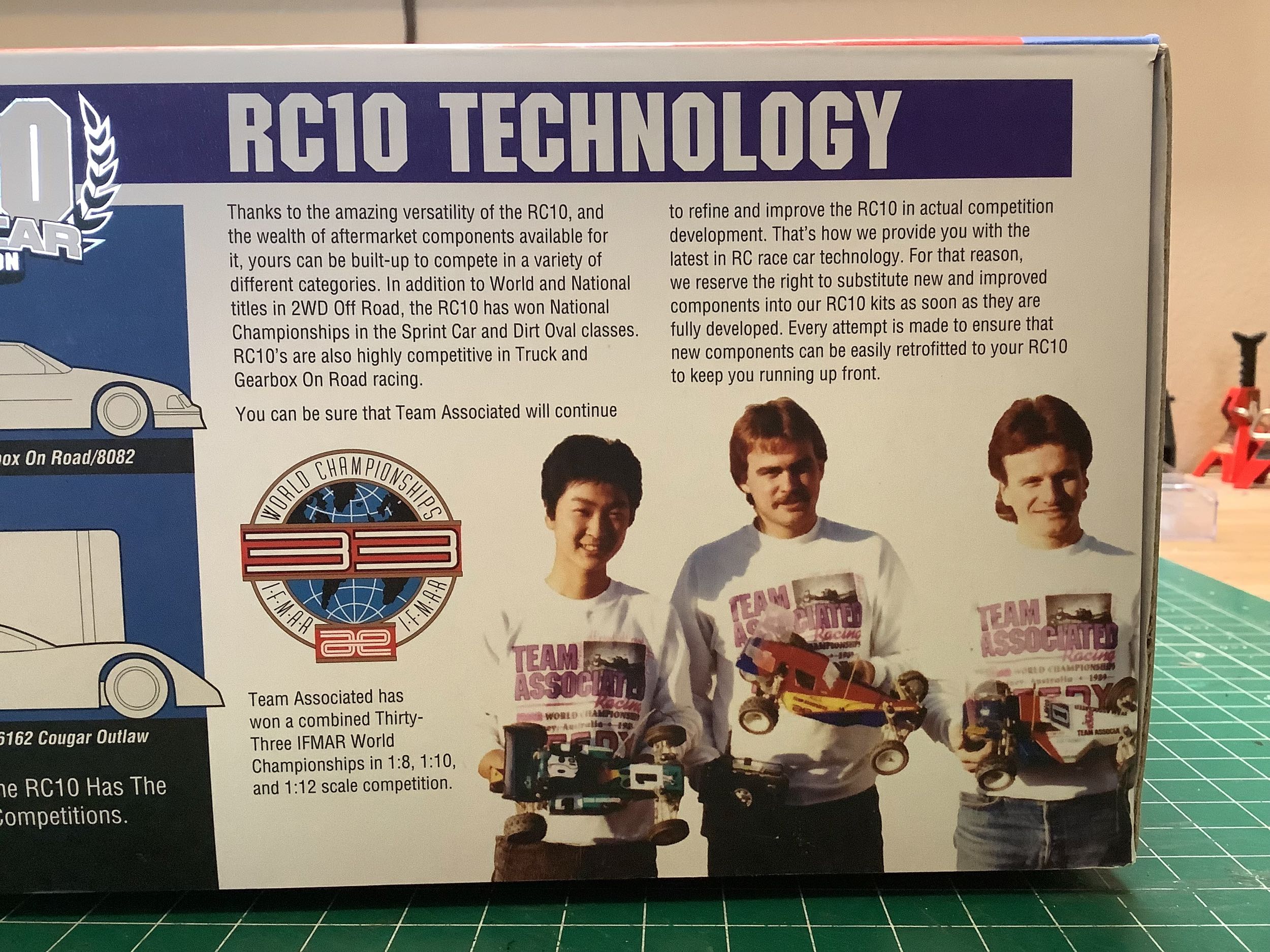
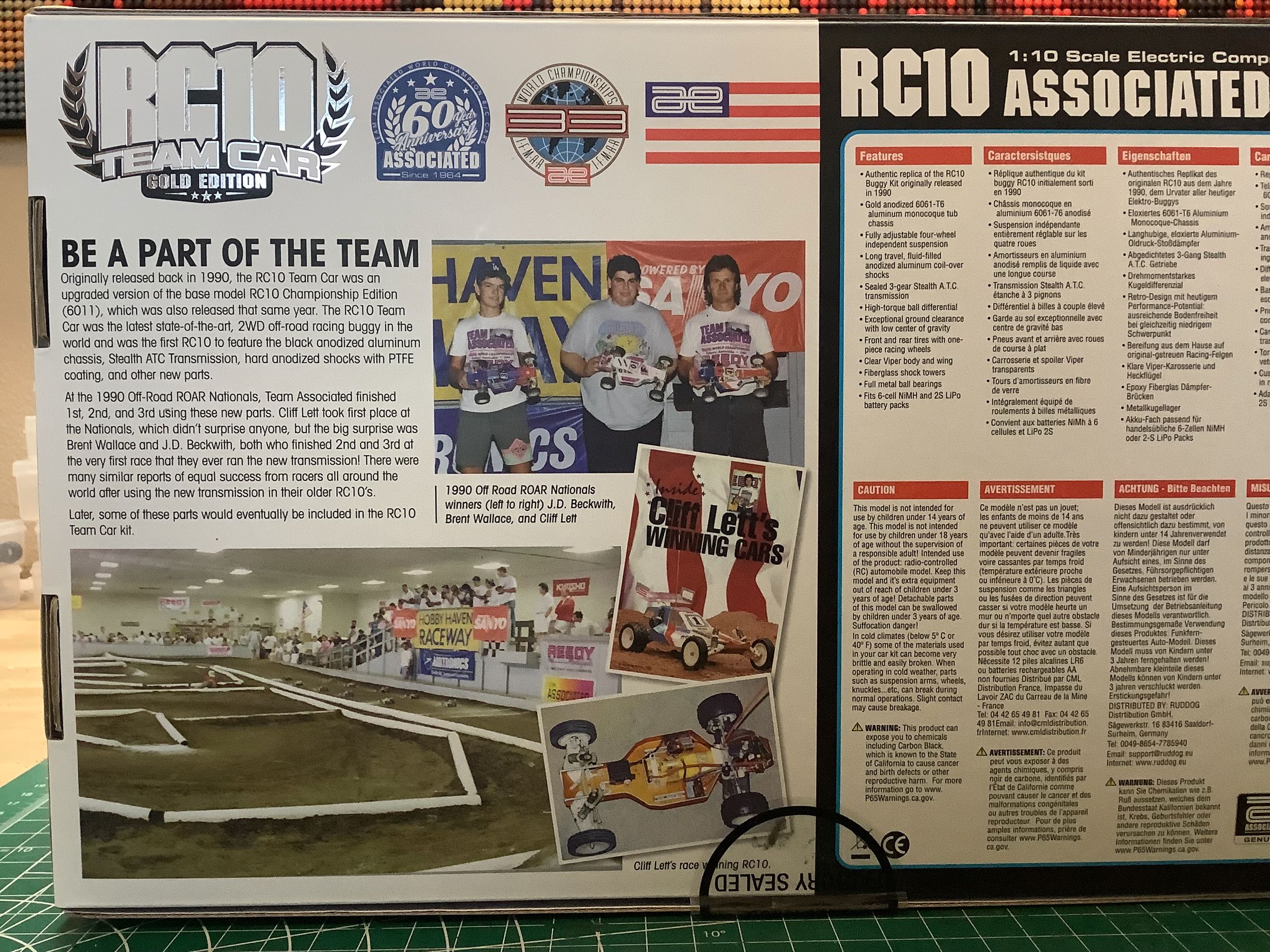
The outside of the box contains a lot of information about RC10 racing history.
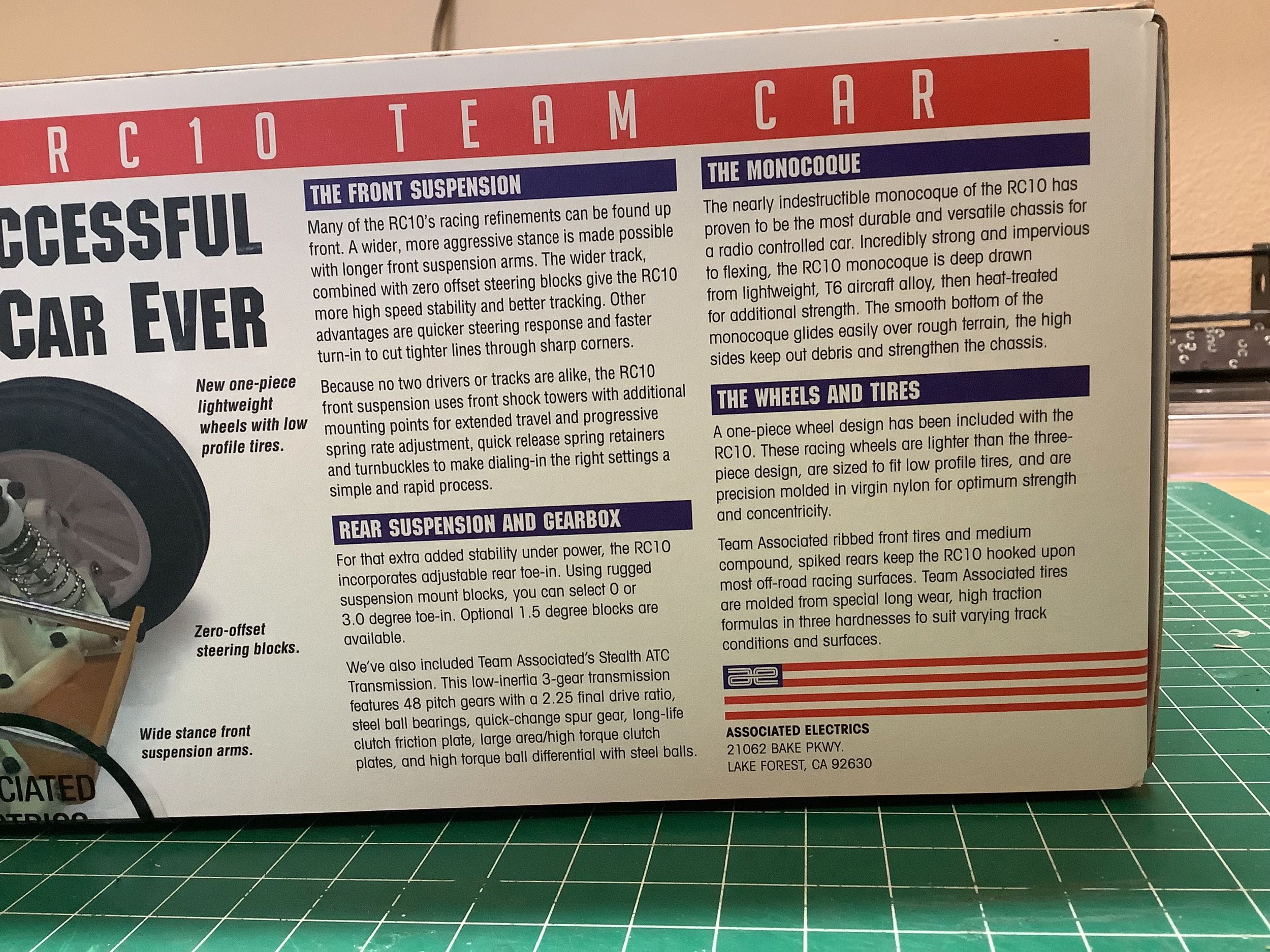
Here is some more historical information about the Team Car and details of the design.
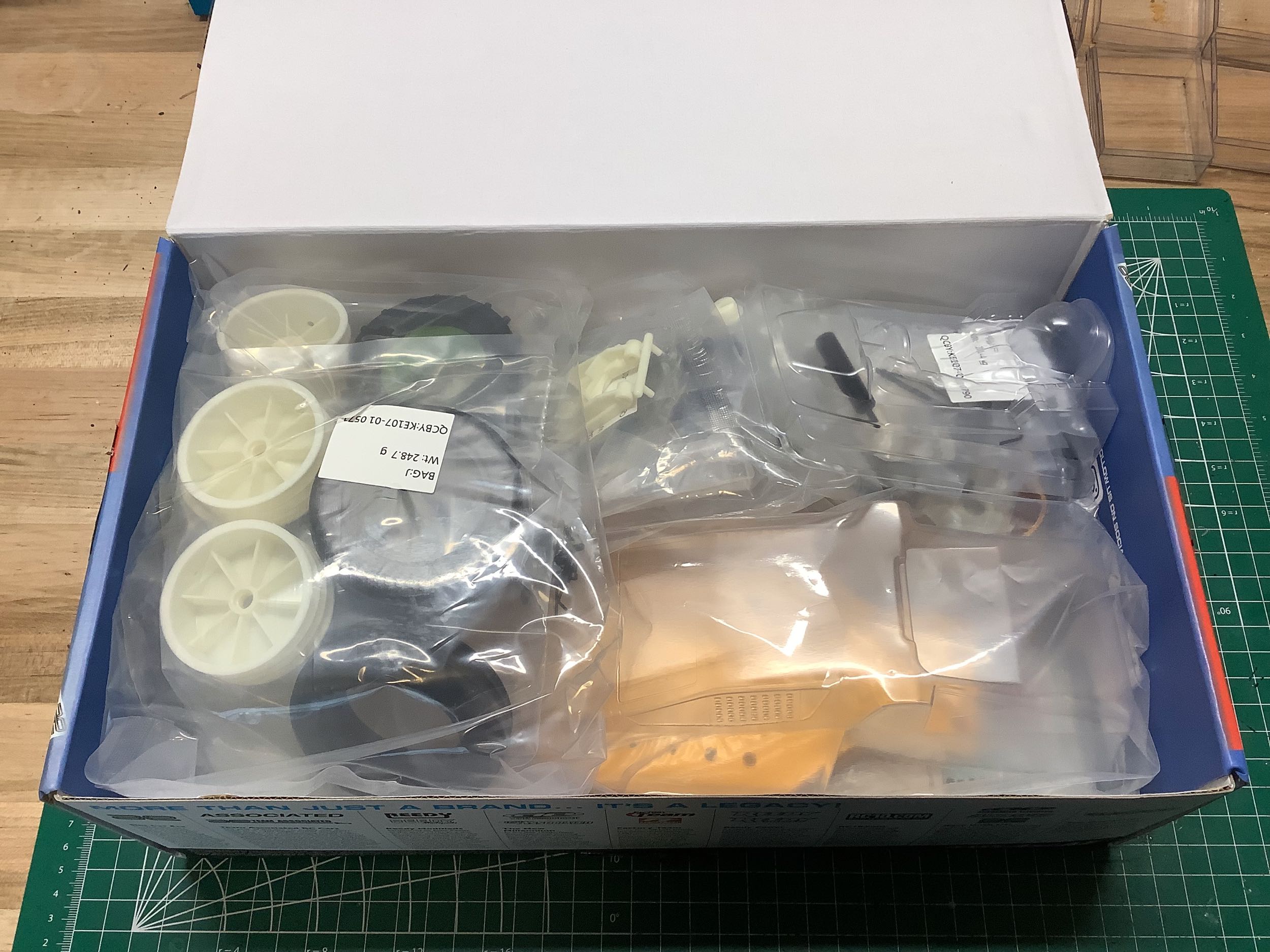
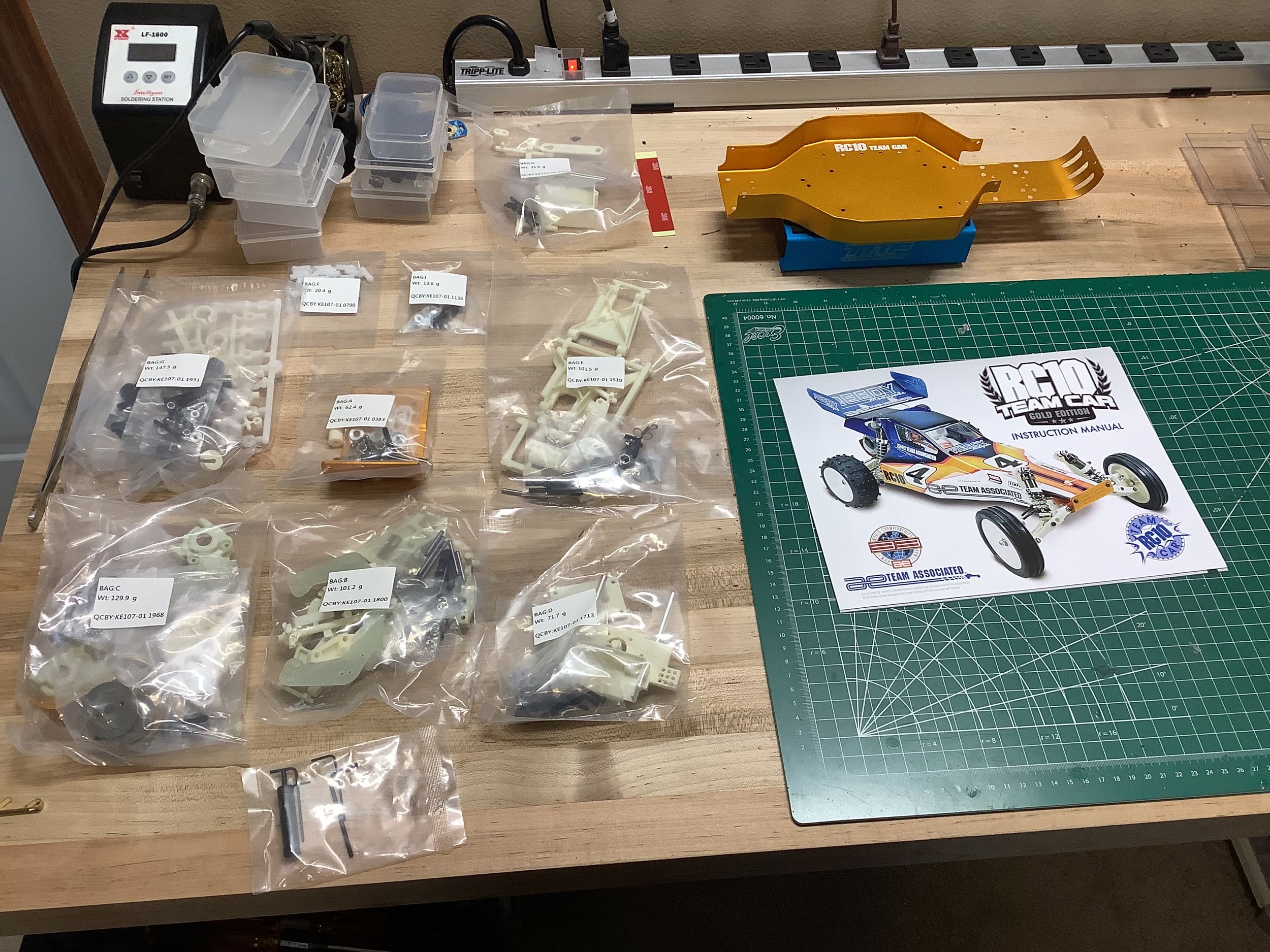
Now I've unpacked the box and am ready to start building. Bags are
labelled A-G. Not shown are the body, wing, and stickers which
are still in the box.
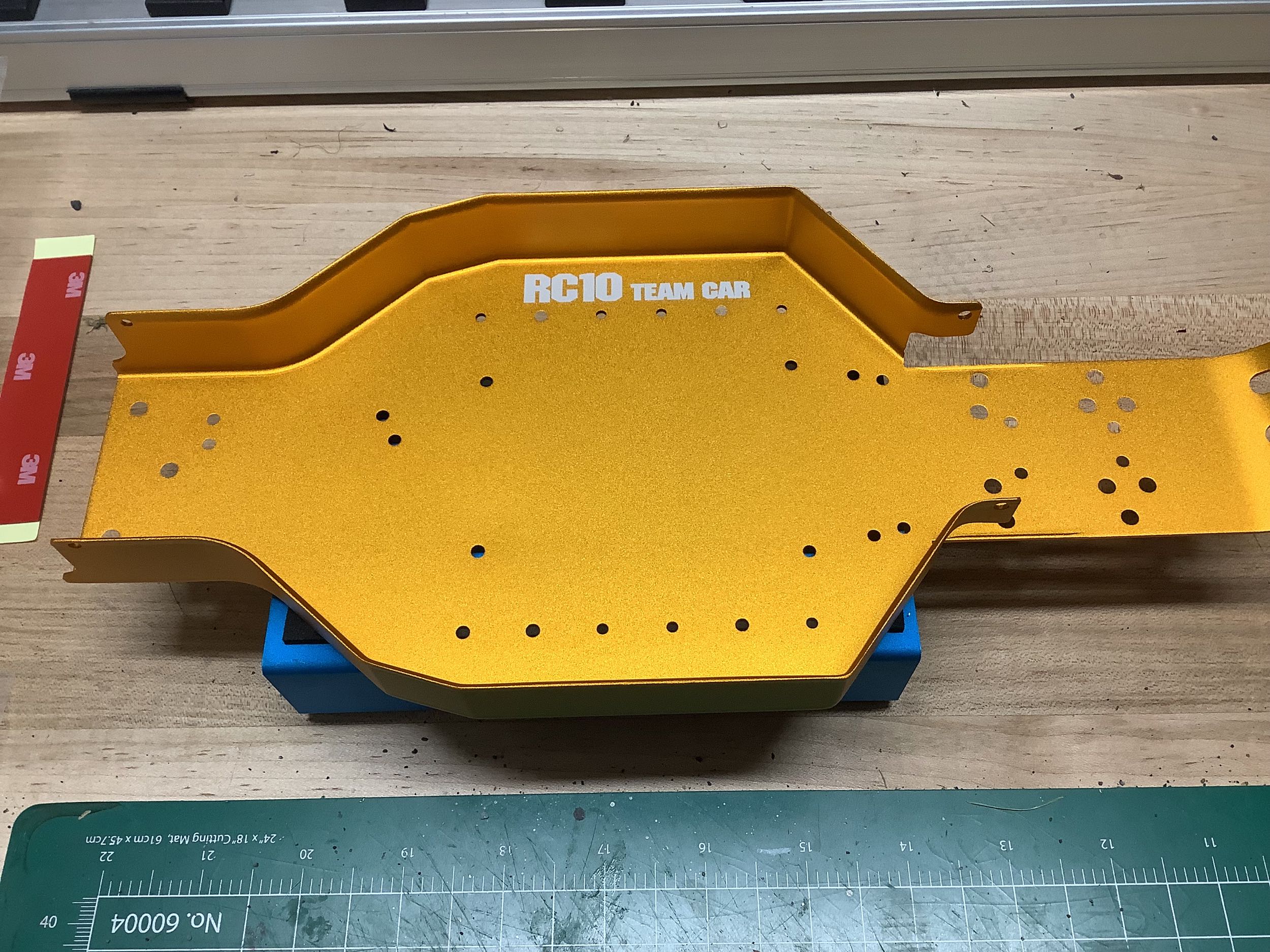
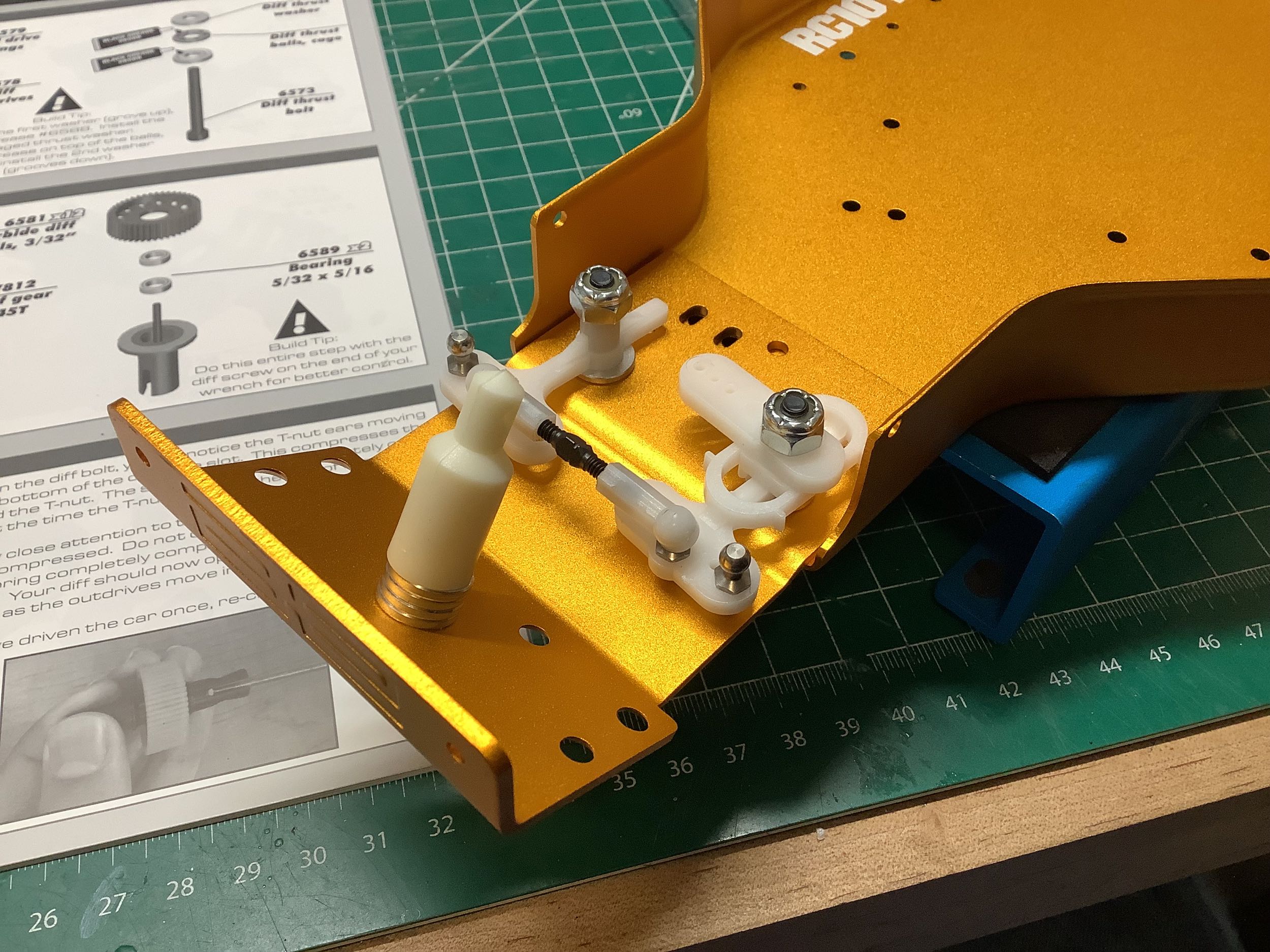
The gold anodized aluminum chassis is exactly like the Classic RC10 I
built before apart from the special "Team Car" label. On the right
I've installed the forward body post and steering cranks. The
body post has two extra washers under it compared to the Classic which
makes the body fit better. The other differences are in
hardware. The plastic nuts which previously held on the cranks
have been replaced with steel lock nuts, and the 8-32 screws which
attach from beneath are now steel hex instead of aluminum Phillips.
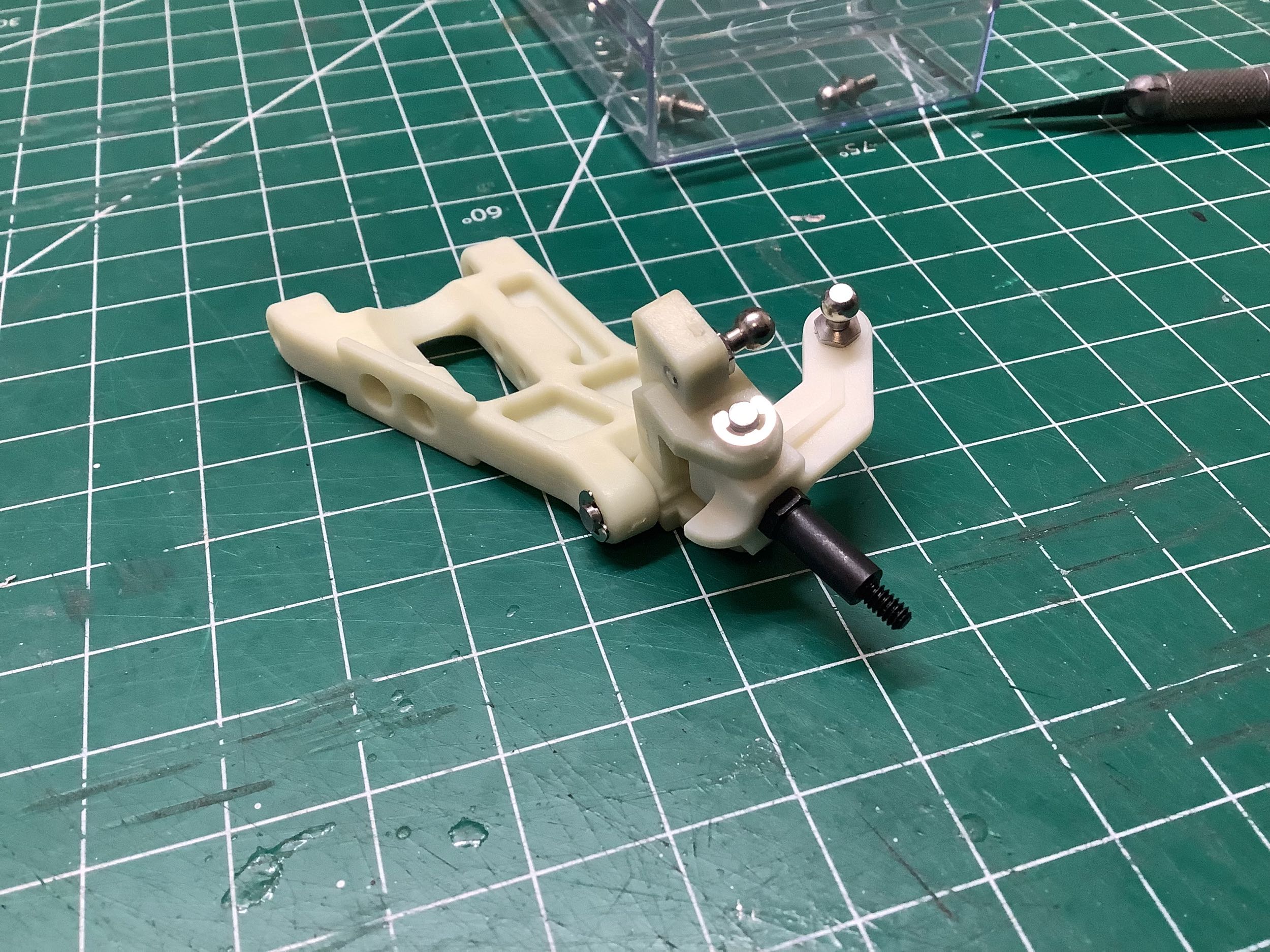
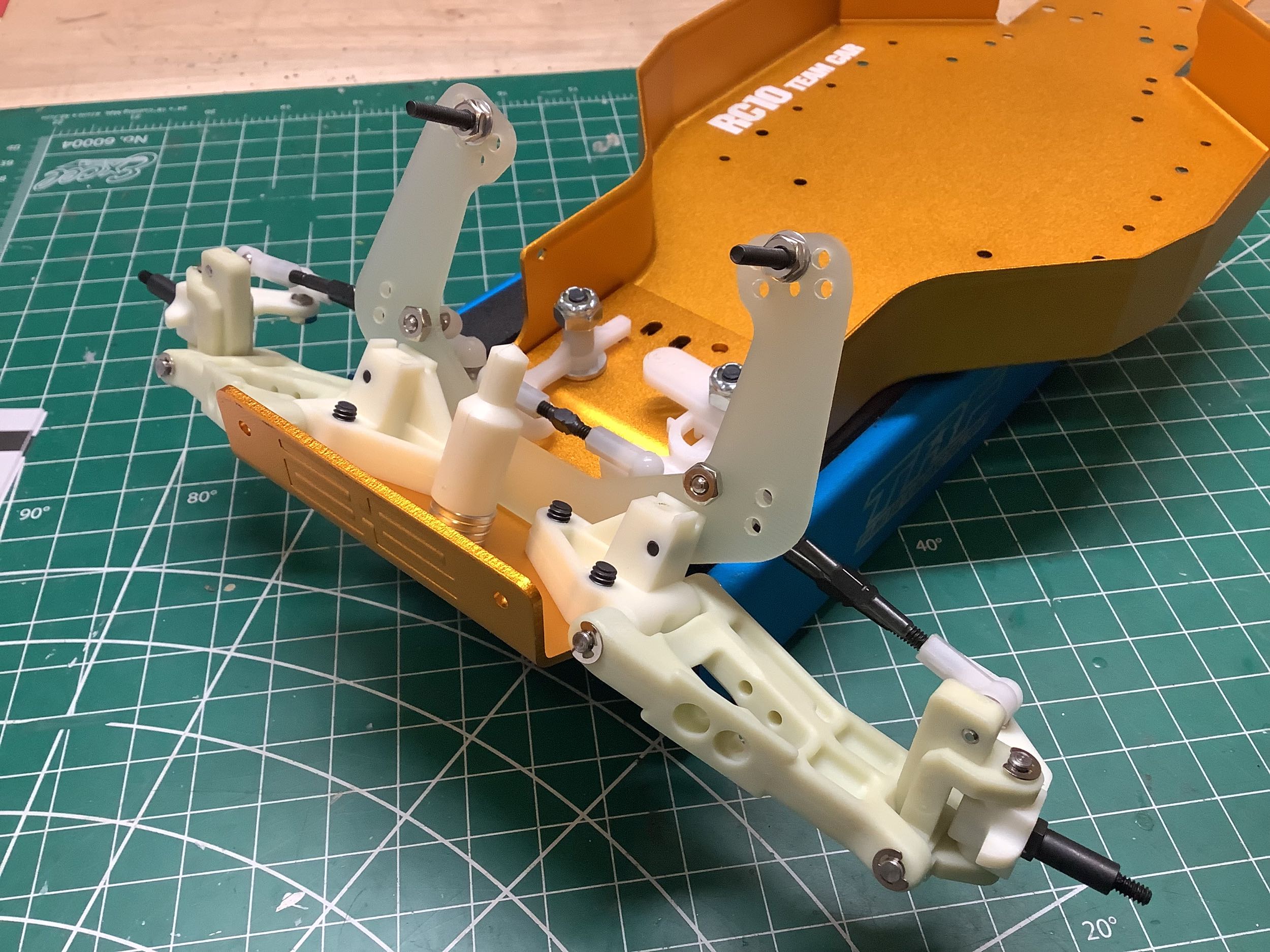
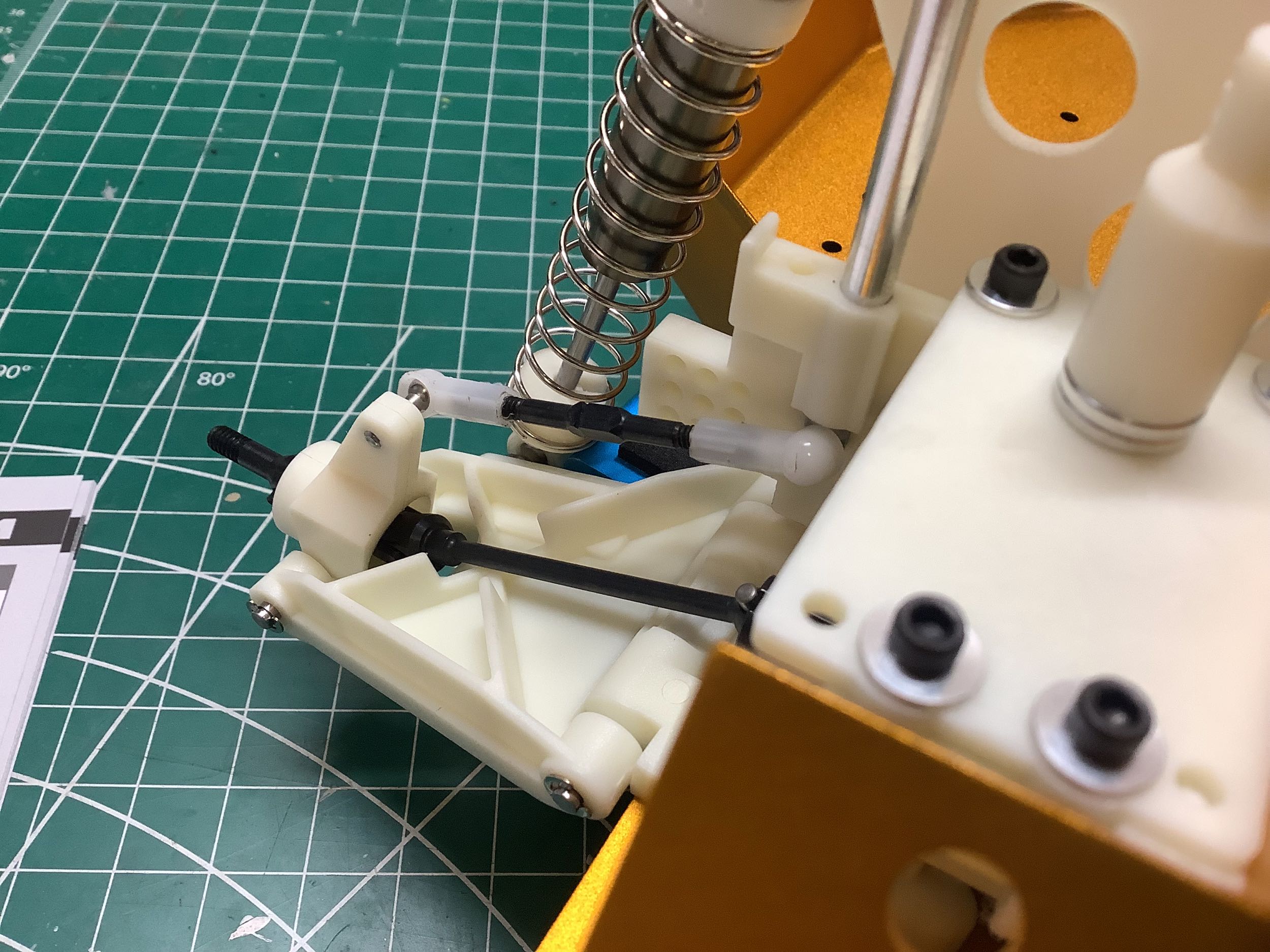
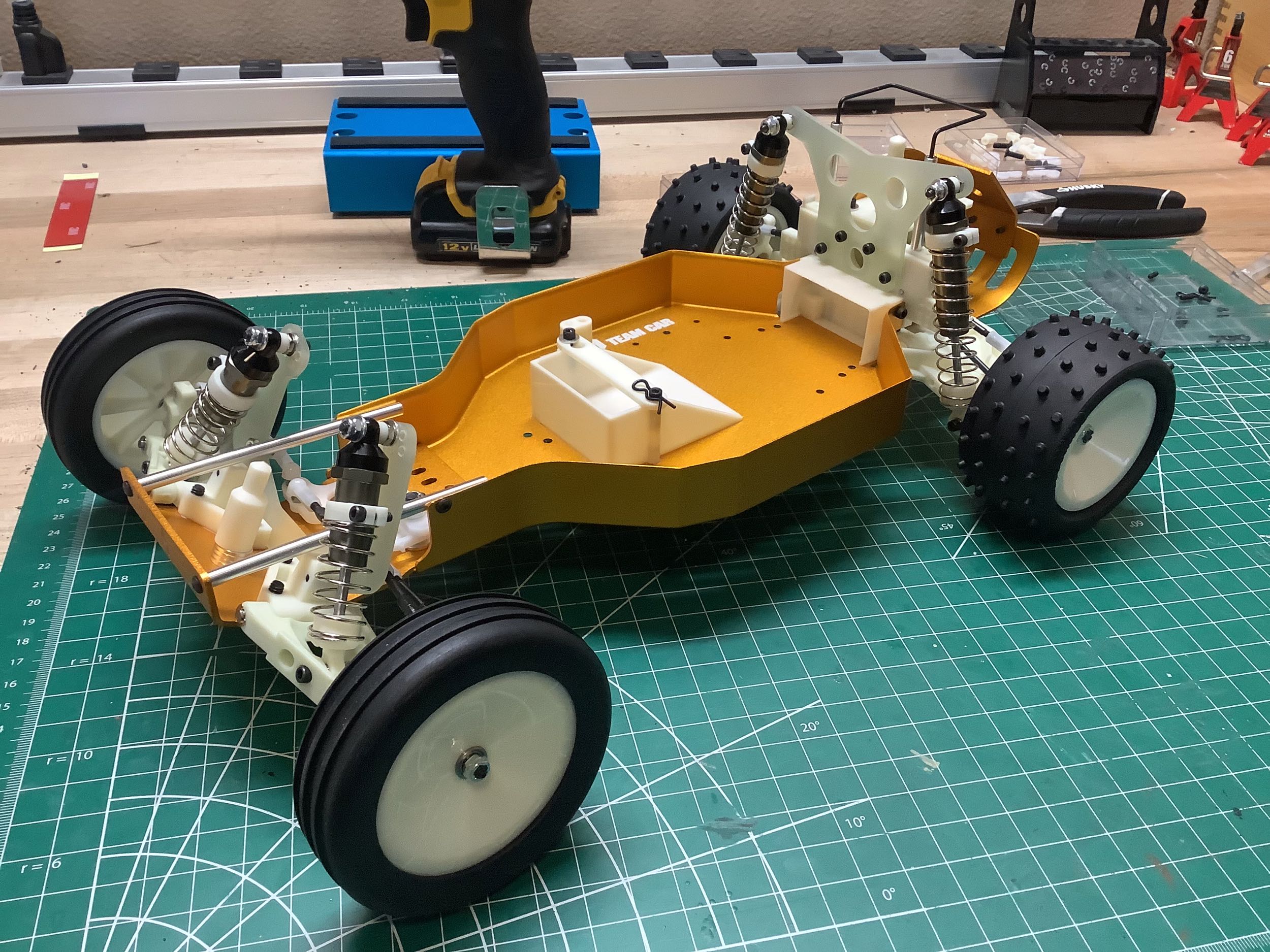
The front suspension is much different than stock. The lower
suspension arms are much longer for a wider track, and the steering
knuckles have no trail (they are aligned with the kingpins). The
caster blocks use a 15º angle instead of 30º. Note that a 30º
kick-up is built into the chassis, so in order to get back down to 15º,
the caster block has to actually tip forward and counteract that
angle. I've also started installing the upper links out of
sequence. This version uses actual turnbuckles instead of just
threaded rods. They are very unpleasant to put together because
the sizes don't fit any of my tools. That front shock tower is
also unique to this model with five upper shock mount position options
instead of the original one.
The real claim to fame of this model is the "stealth"
transmission. I don't find anything about it to be stealthy, but
it is vastly simplified compared to the original transmission.
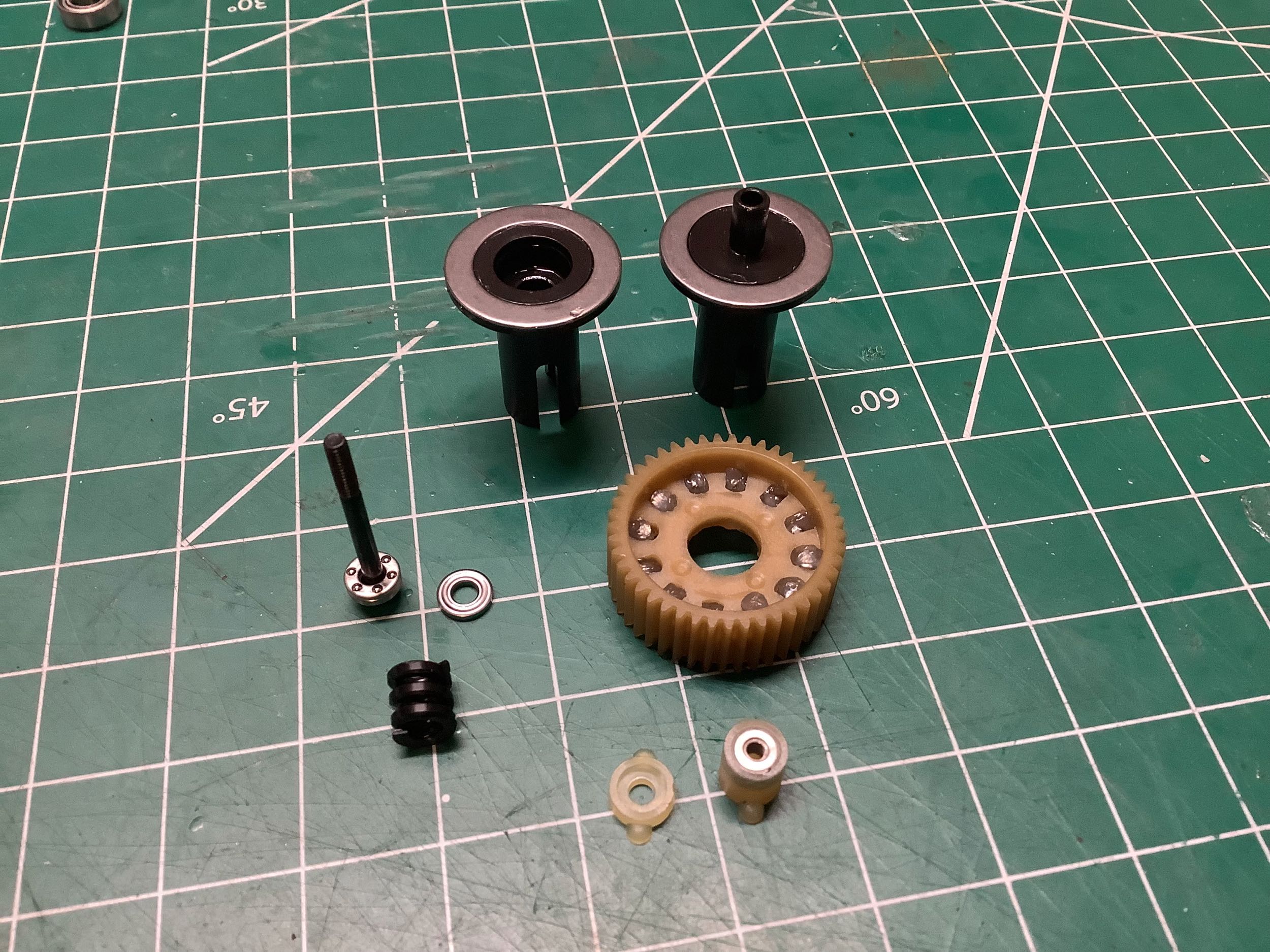
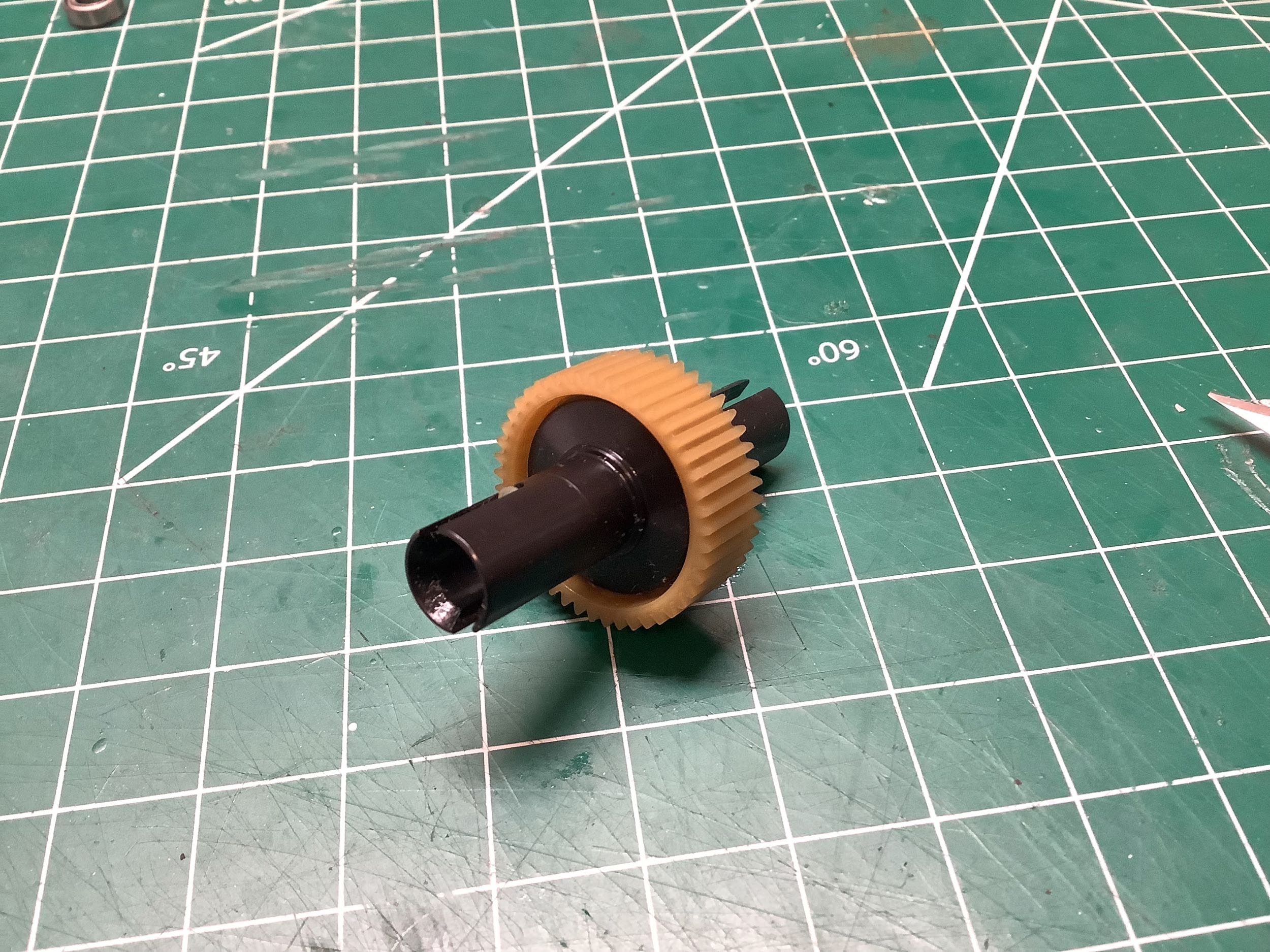
Instead of having the ball differential built into the spur gear, it now
connects to the outdrives directly and is integrated with the final
gear. With 12 carbide balls, it is plenty sturdy.
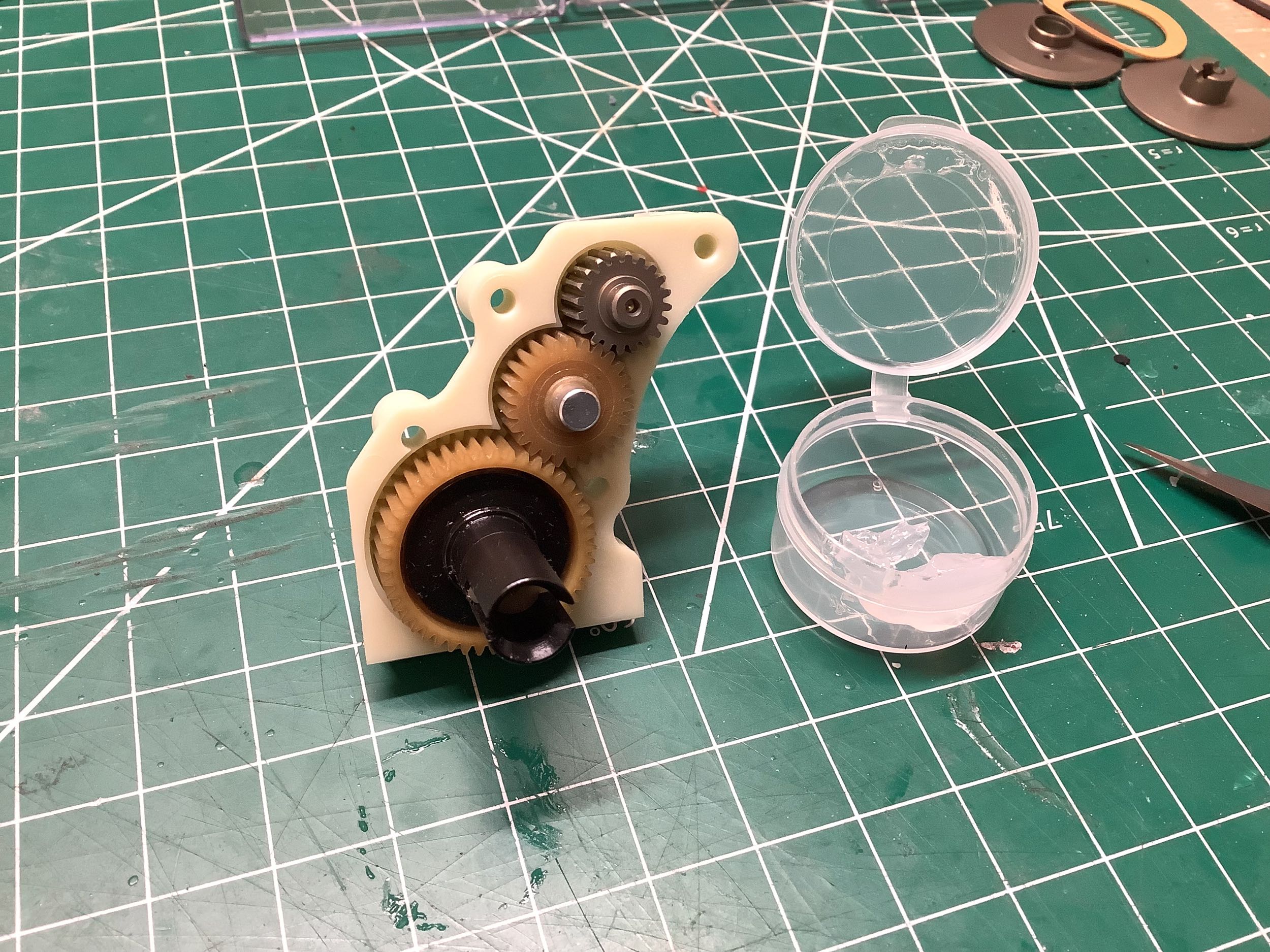
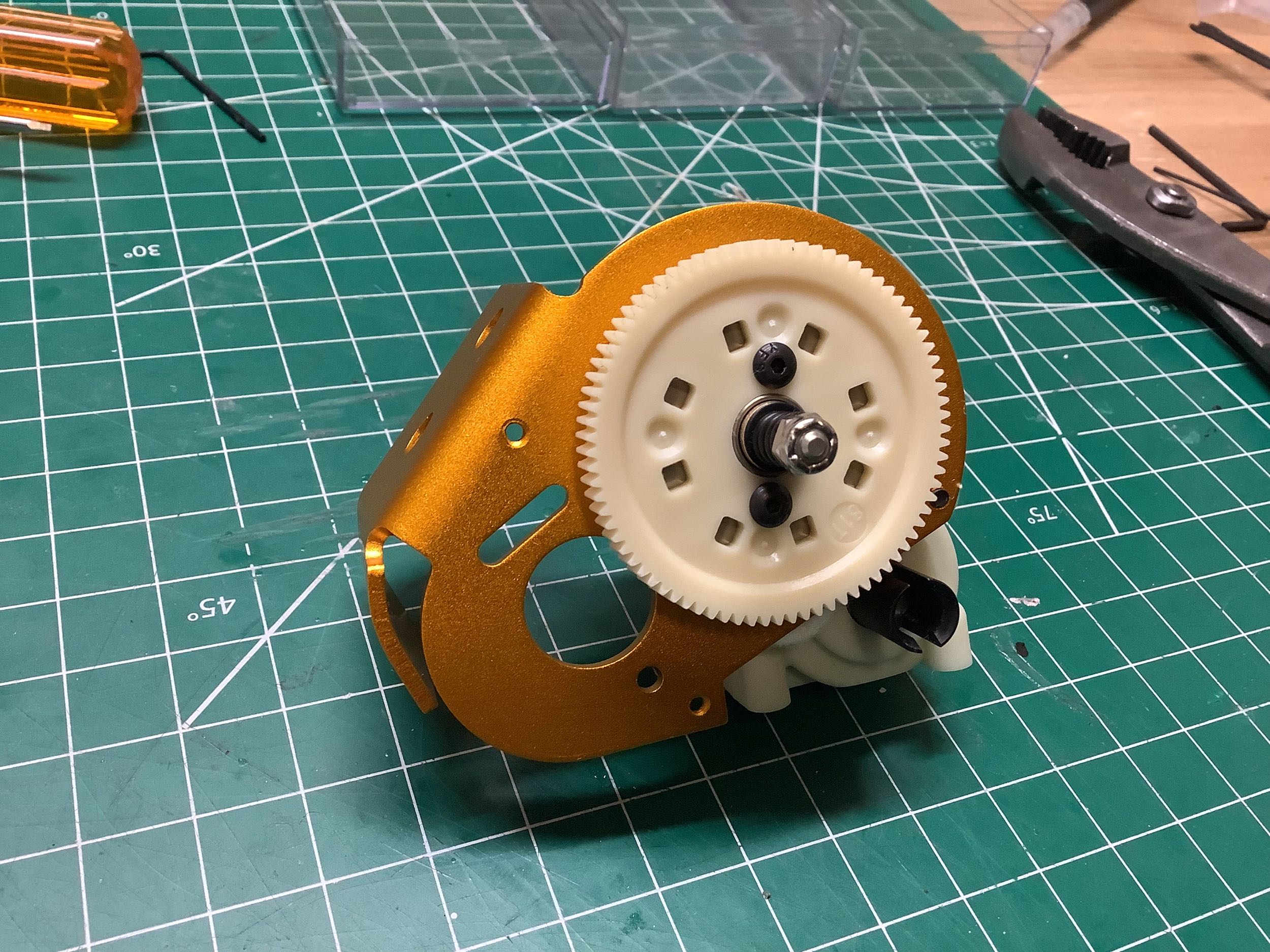
The stealth transmission uses three gears: a drive gear from the spur,
an idler gear, and the differential gear. By comparison, the
original used six gears with three on either side of the transmission.
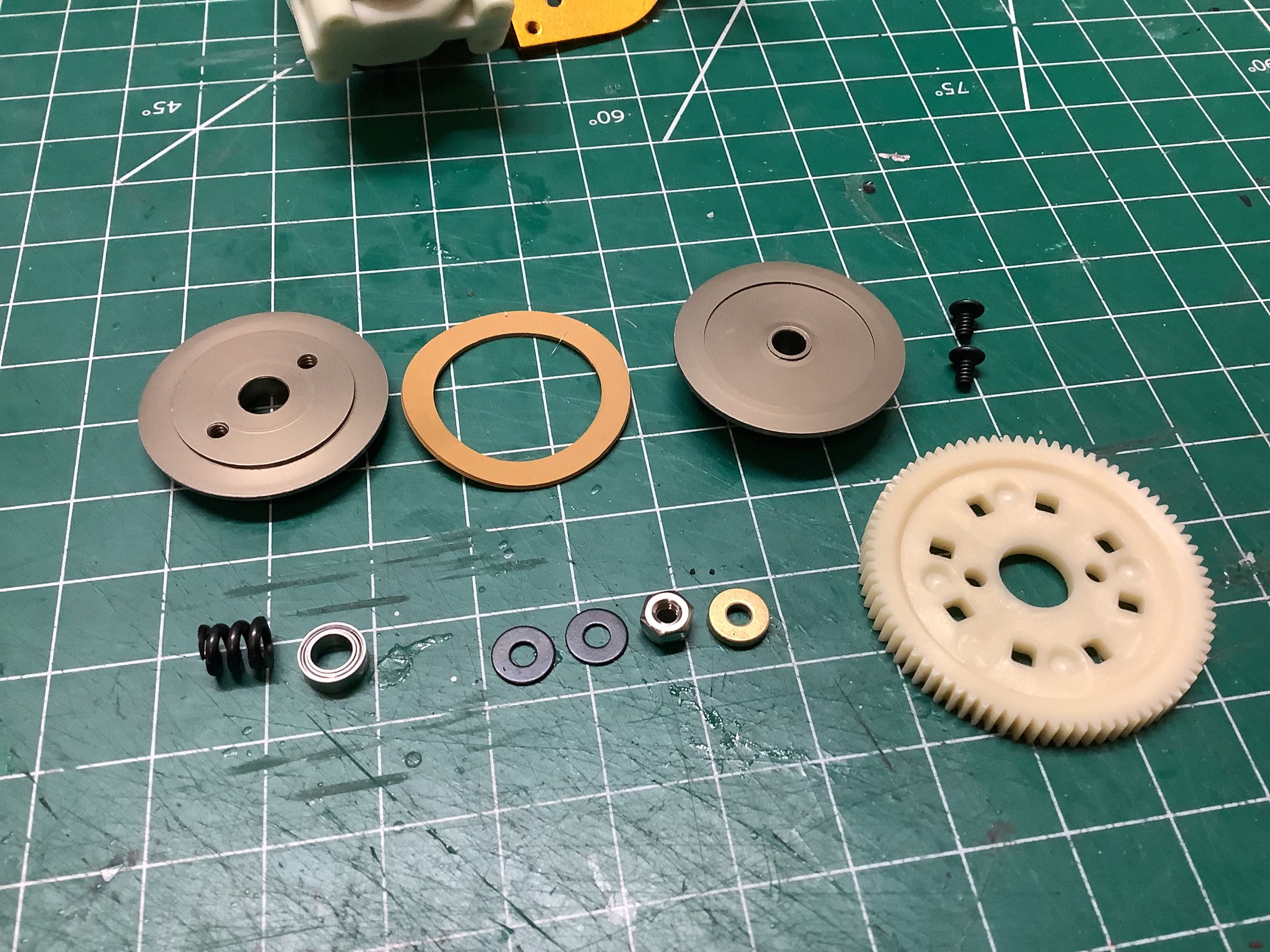
This model also incorporates a slipper clutch (Associated calls it a
"torque control hub") which is integrated with the spur gear. The
clutch disk is a rubbery annulus.
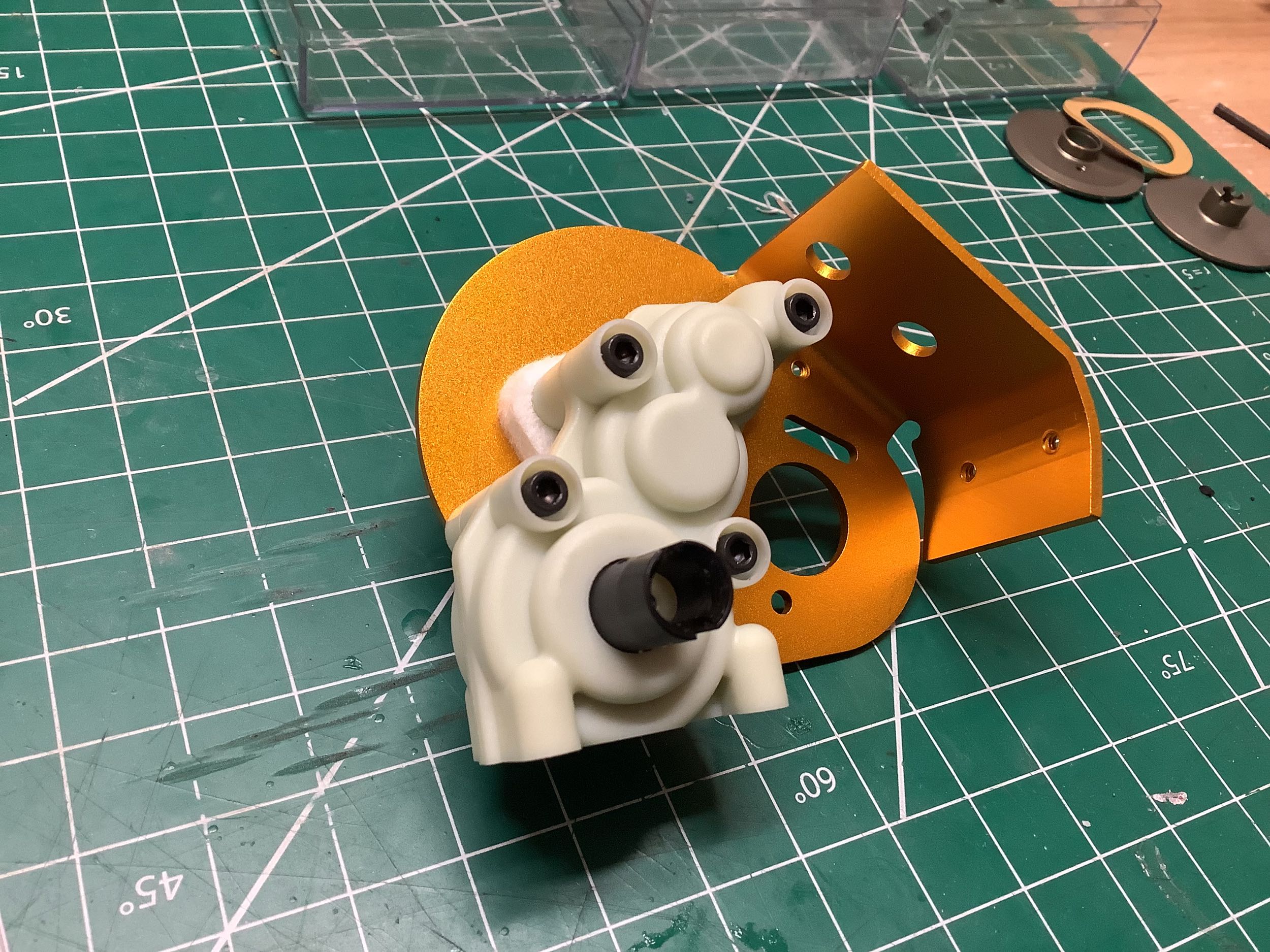
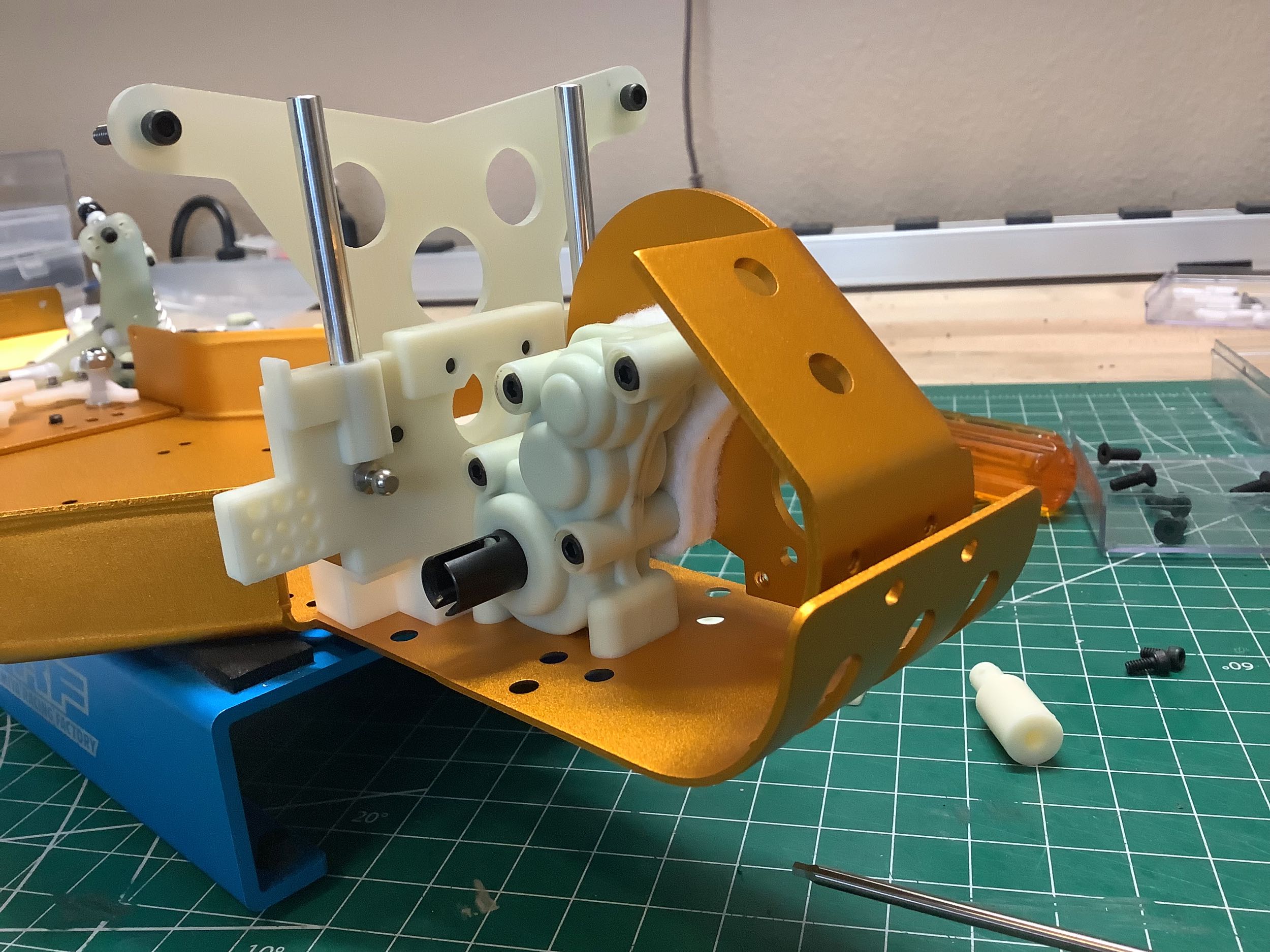
The stealth transmission is much narrower than the original so it mounts
with different holes to the chassis. The rear shock tower and
bulkhead are the same as standard. The rear suspension uses the
stock lower arms, but the steel axles now have universal joints instead
of dog bones.
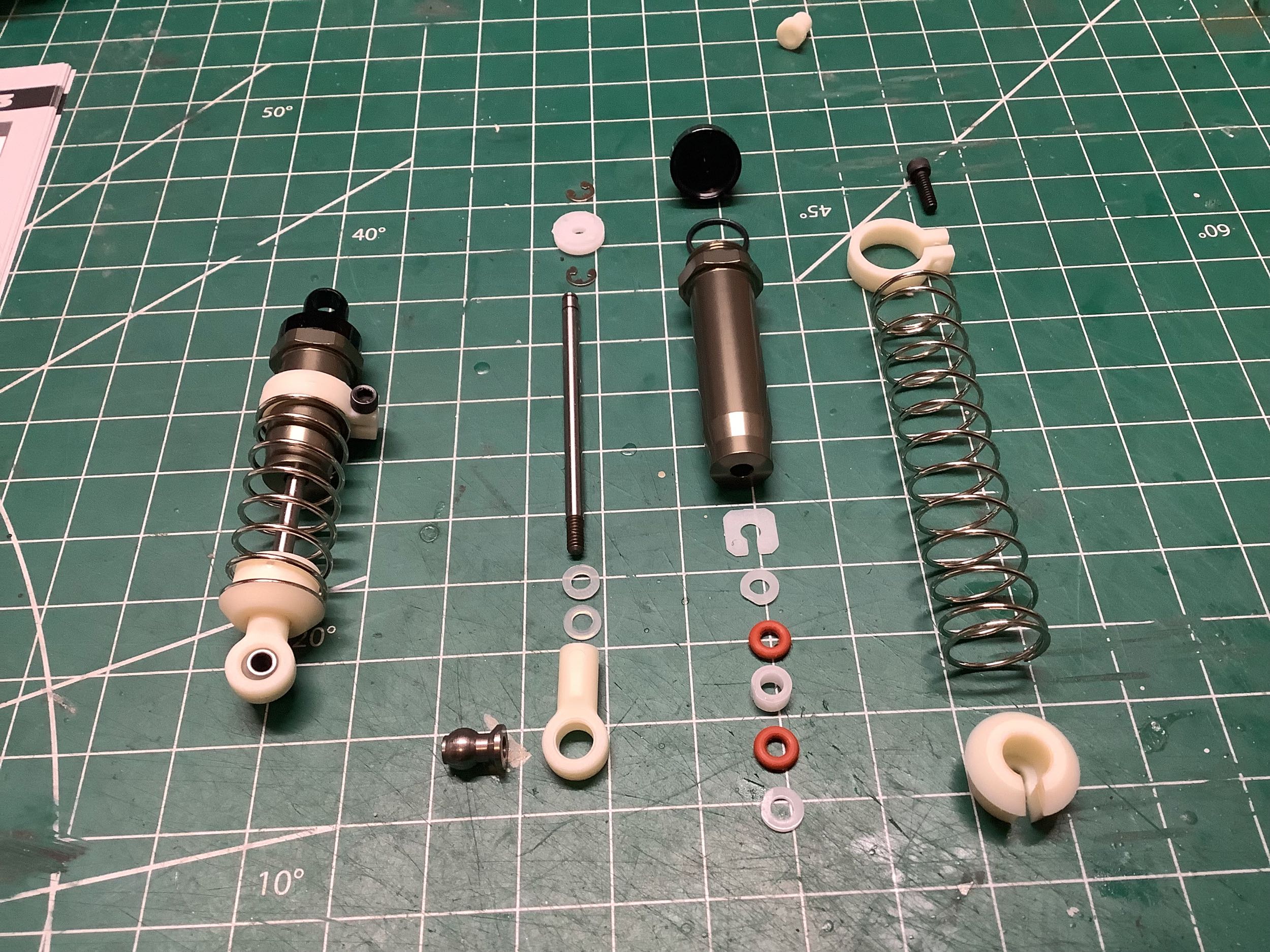
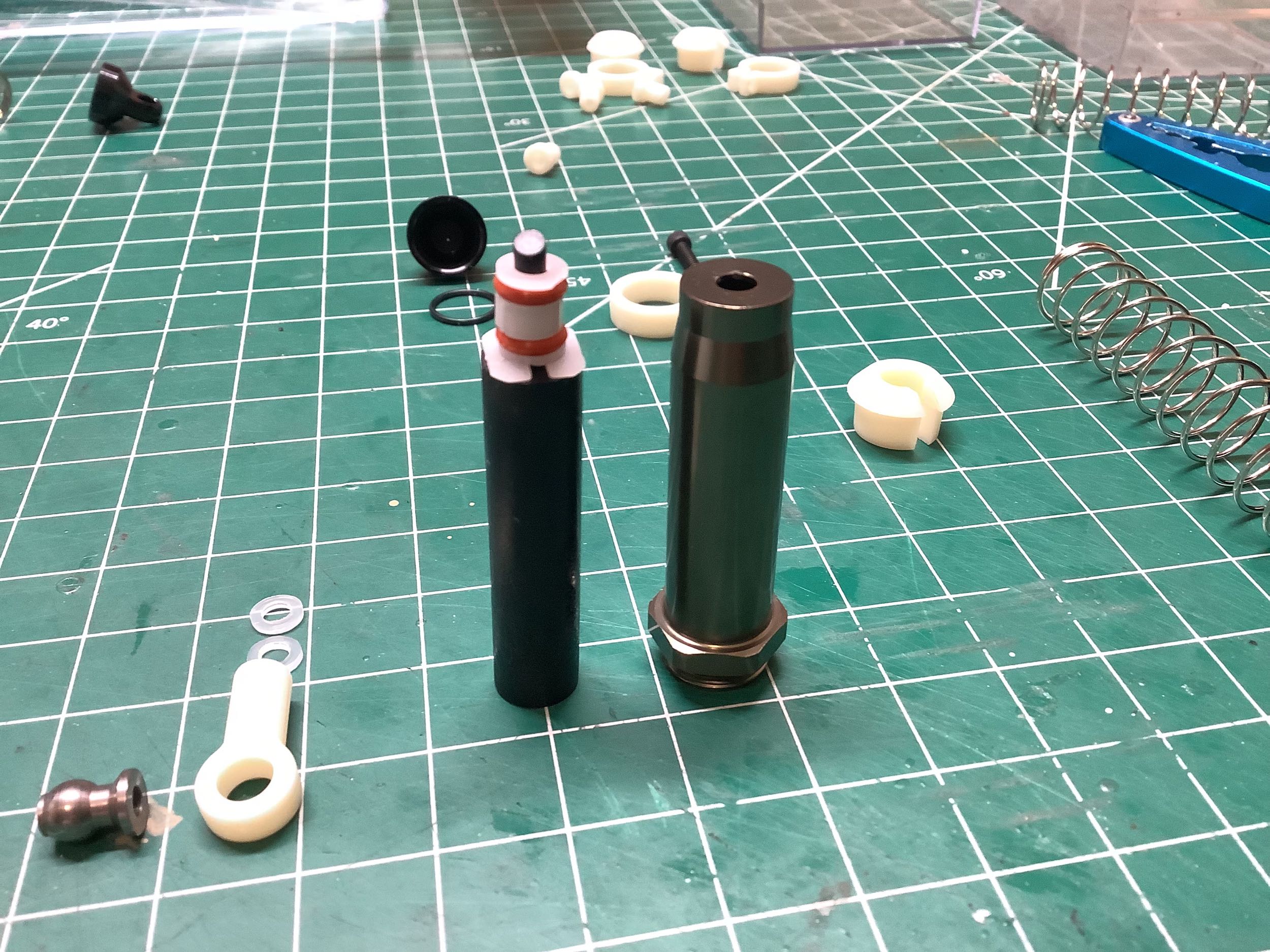
The shocks are the same style as on the original, but they use hard
anodizing instead of the regular gold sulfuric acid anodize. The
front shocks have also been lengthened by 0.15".
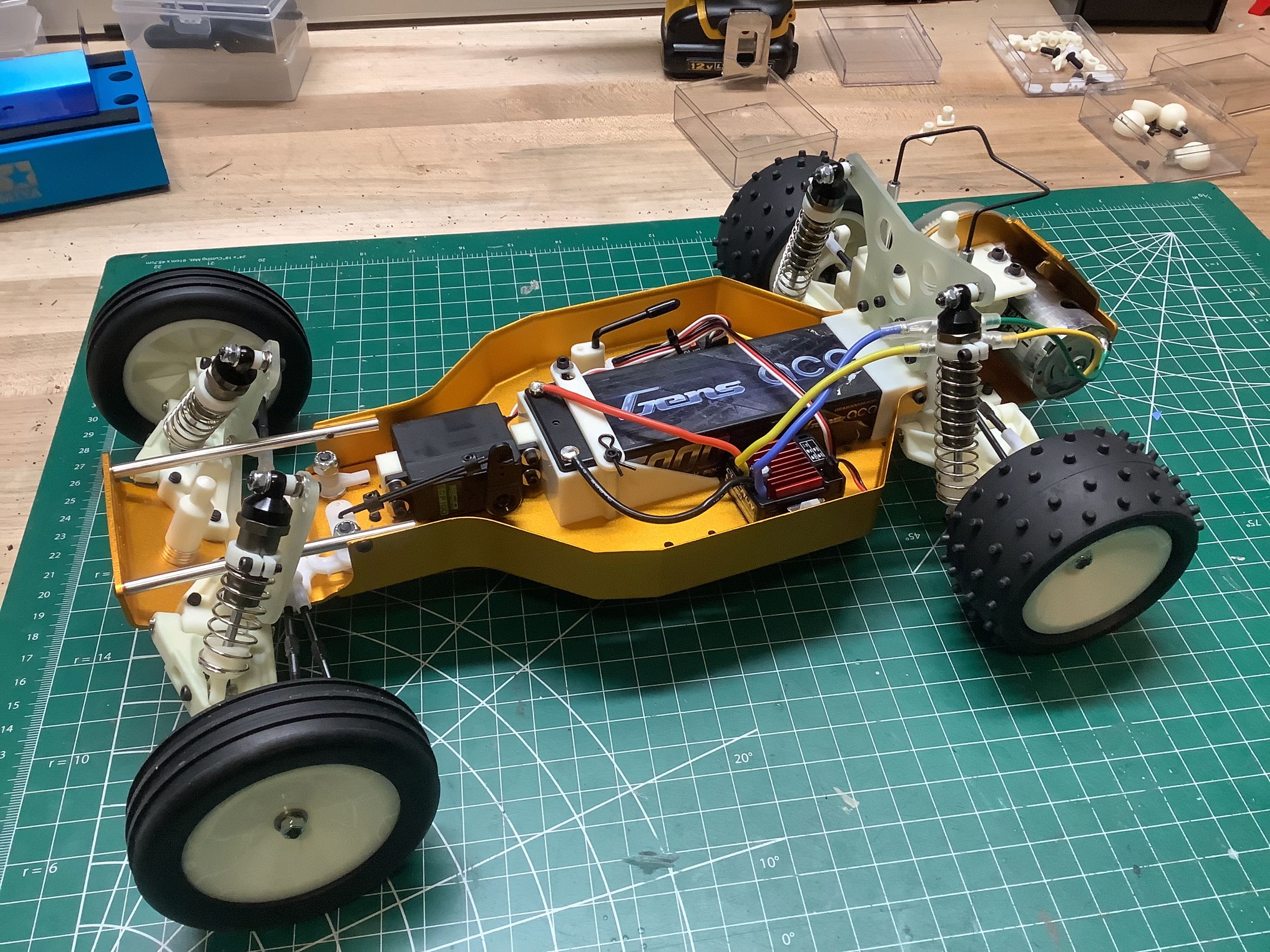
The battery mount is set up for a standard hard pack Li-Po just like the
Classic. Sadly, they've retained the silly z-bend wires for the
steering linkage and the awful wire wing mount. The 3-piece wheels
have been replaced with monolithic dish wheels (the rear uses a larger
2" diameter) and the tires are different as well. I've installed
the electronics and am ready to try it out!
©2025 Eric Albrecht