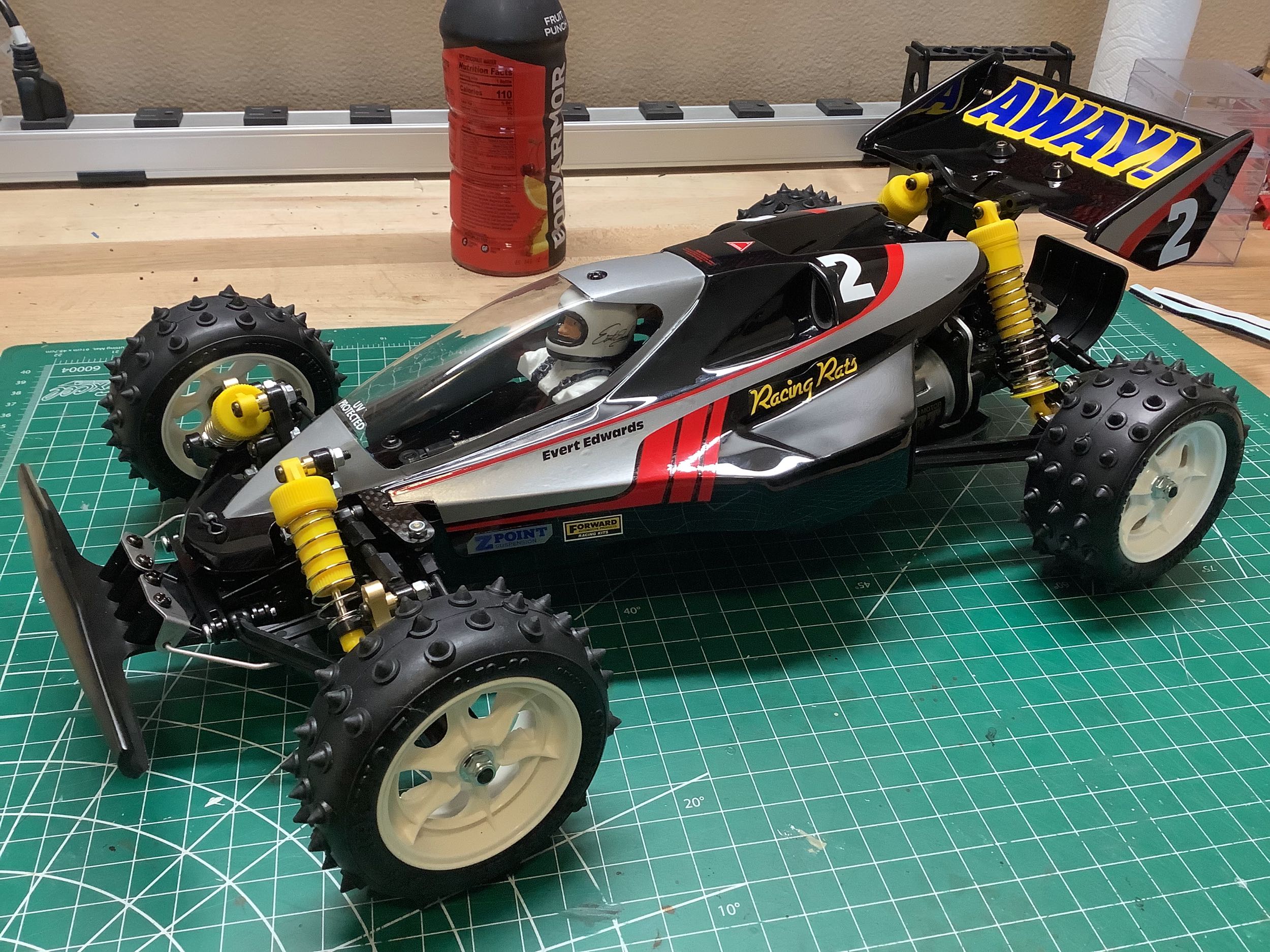
This chassis is based on the Avante which I already wrote about it great detail, so I
will concentrate only on the differences here. Those interested
in all the other details of this chassis can read about them on my Avante page.
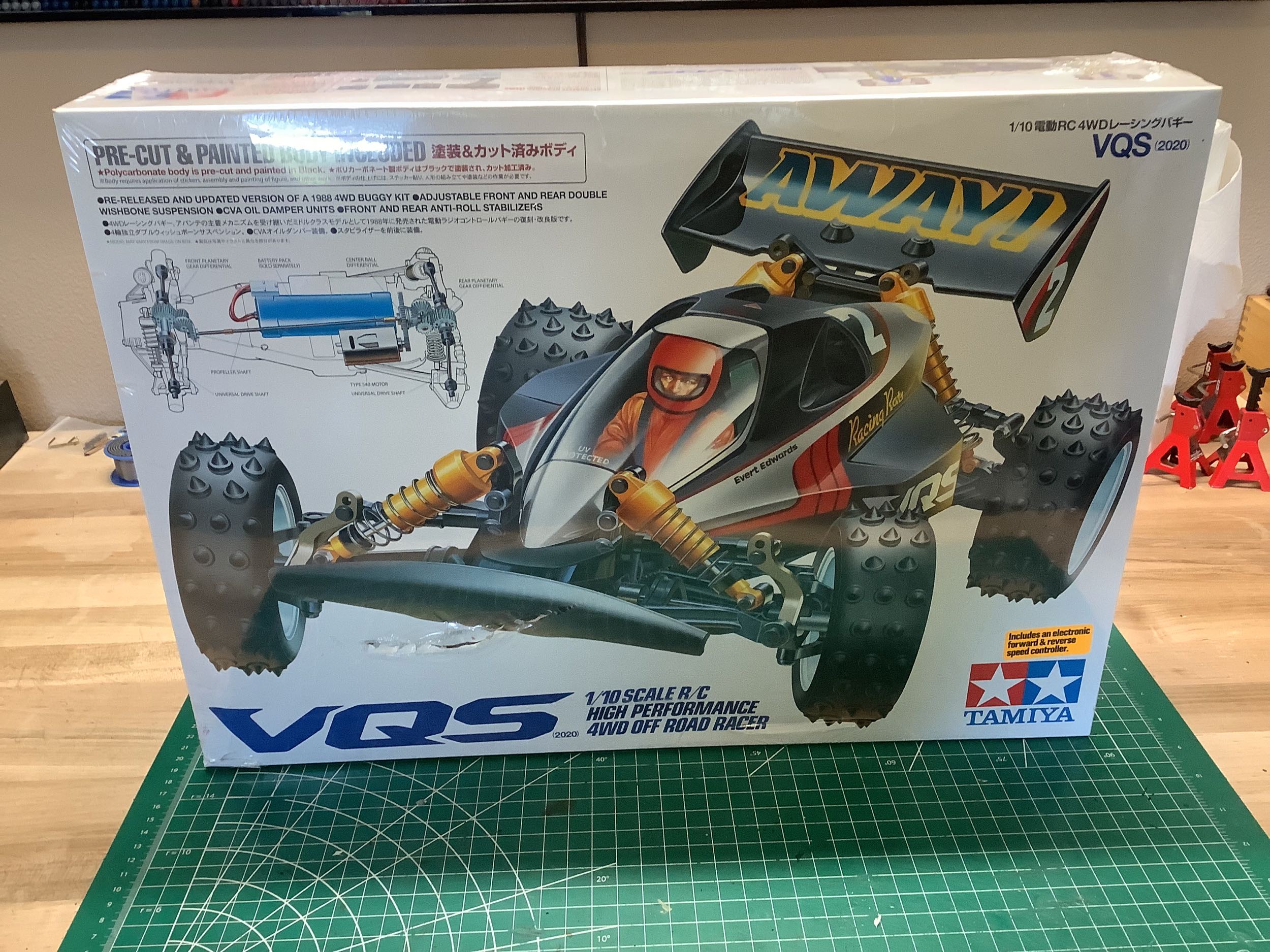
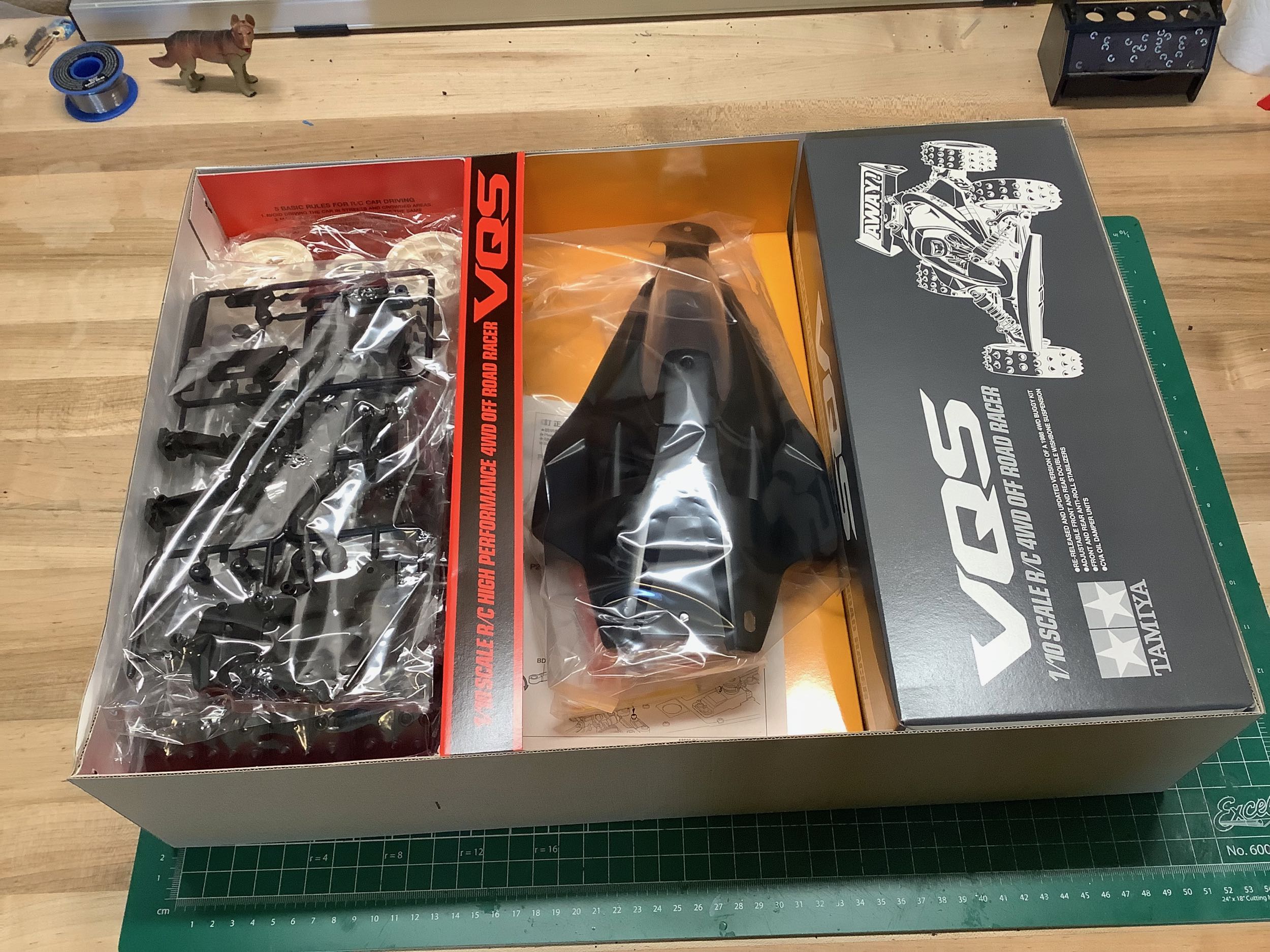
The VQS comes in a much smaller box than the Avante or Egress, probably
because it does not have any special parts presented in blister
packs. In fact, very few of the parts in this model are metal
apart from the screws and hardware. Even so, the box is divided
nicely with a pre-cut, pre-painted black body in the center.
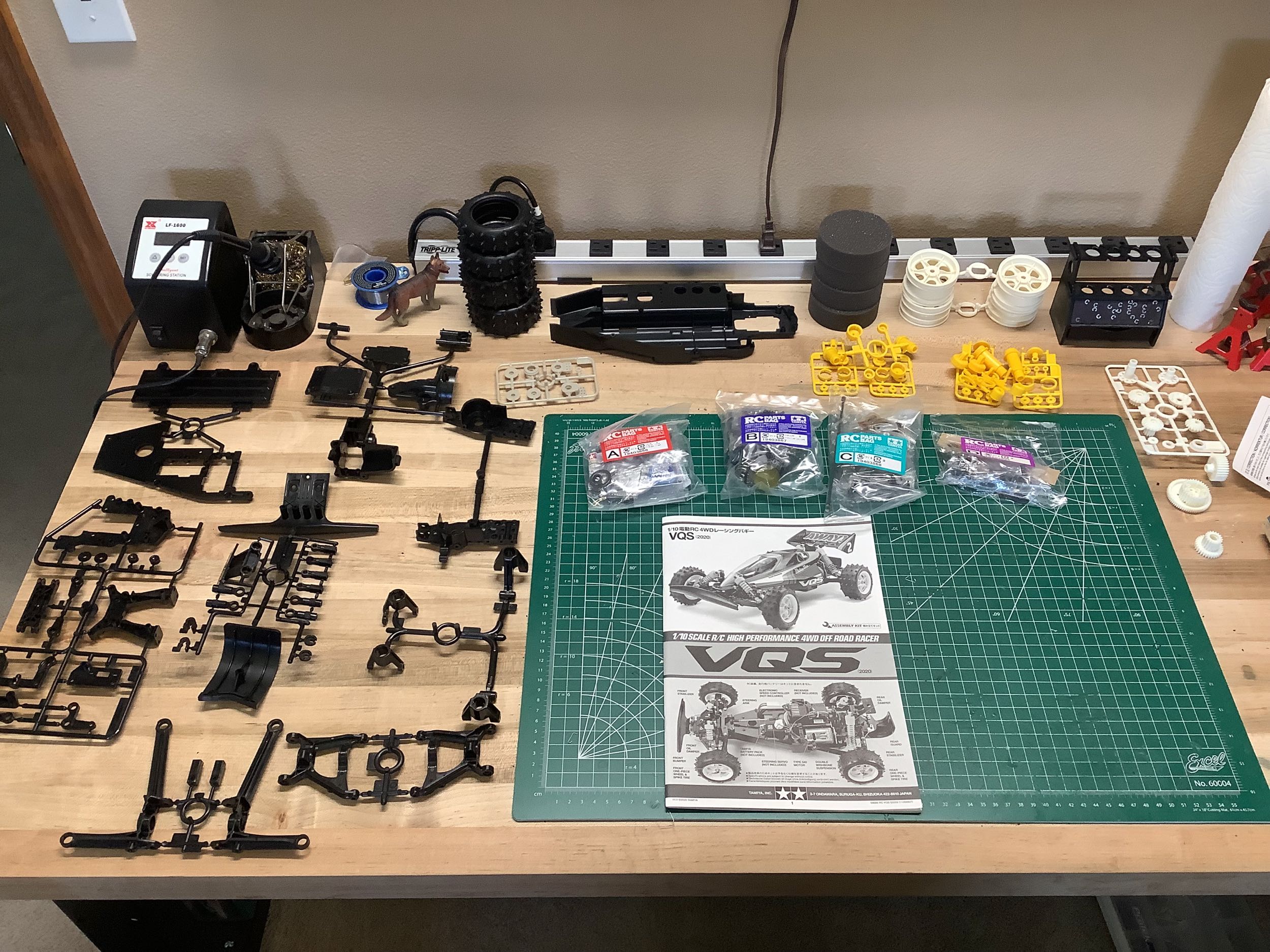
Here are all the parts laid out on my build table. It actually
doesn't look like that much, but there is considerably more plastic here
than the Avante. The chassis tub and yellow shock parts are
obvious immediately. There are four sequentially labeled hardware
bags.
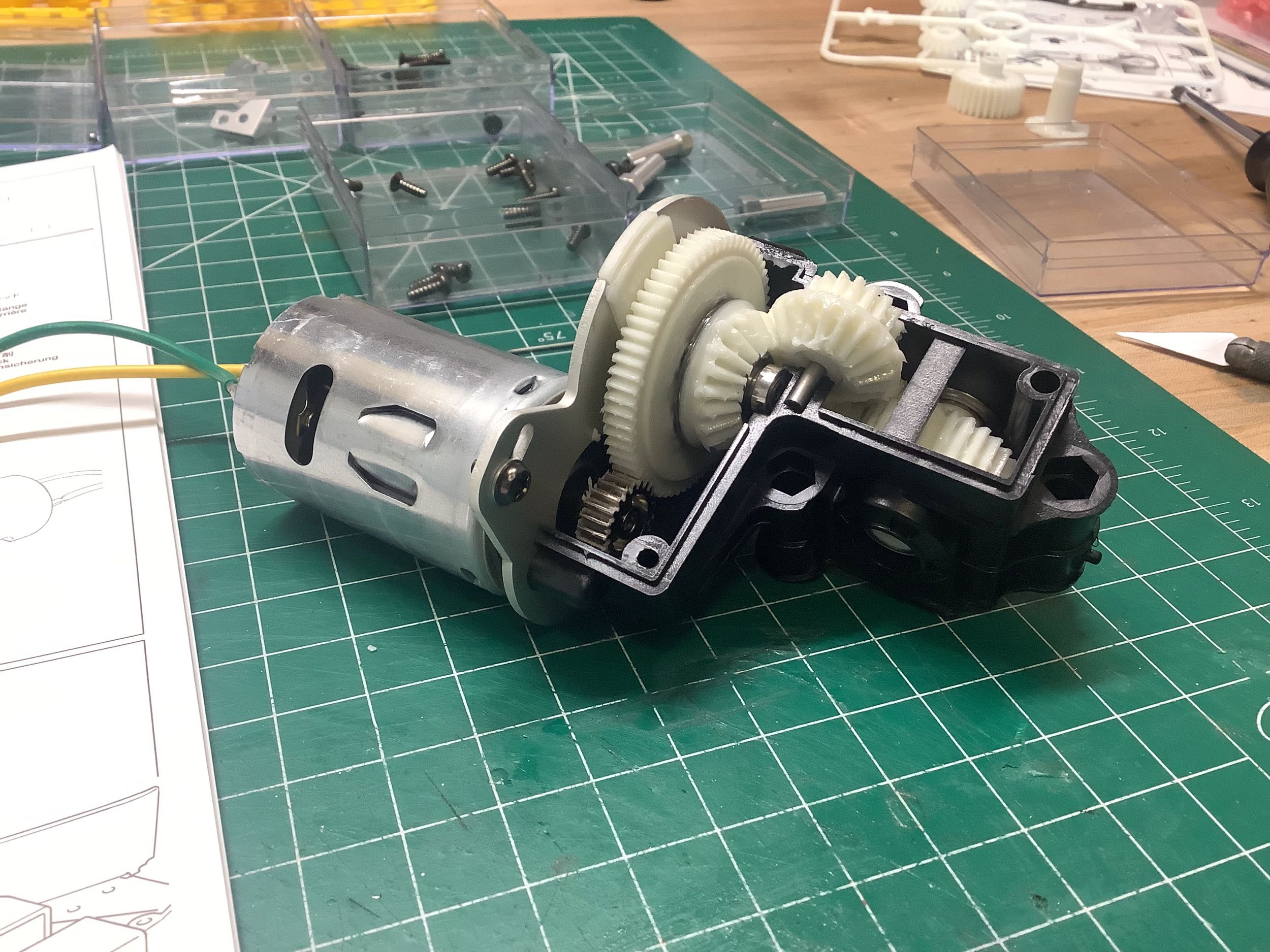
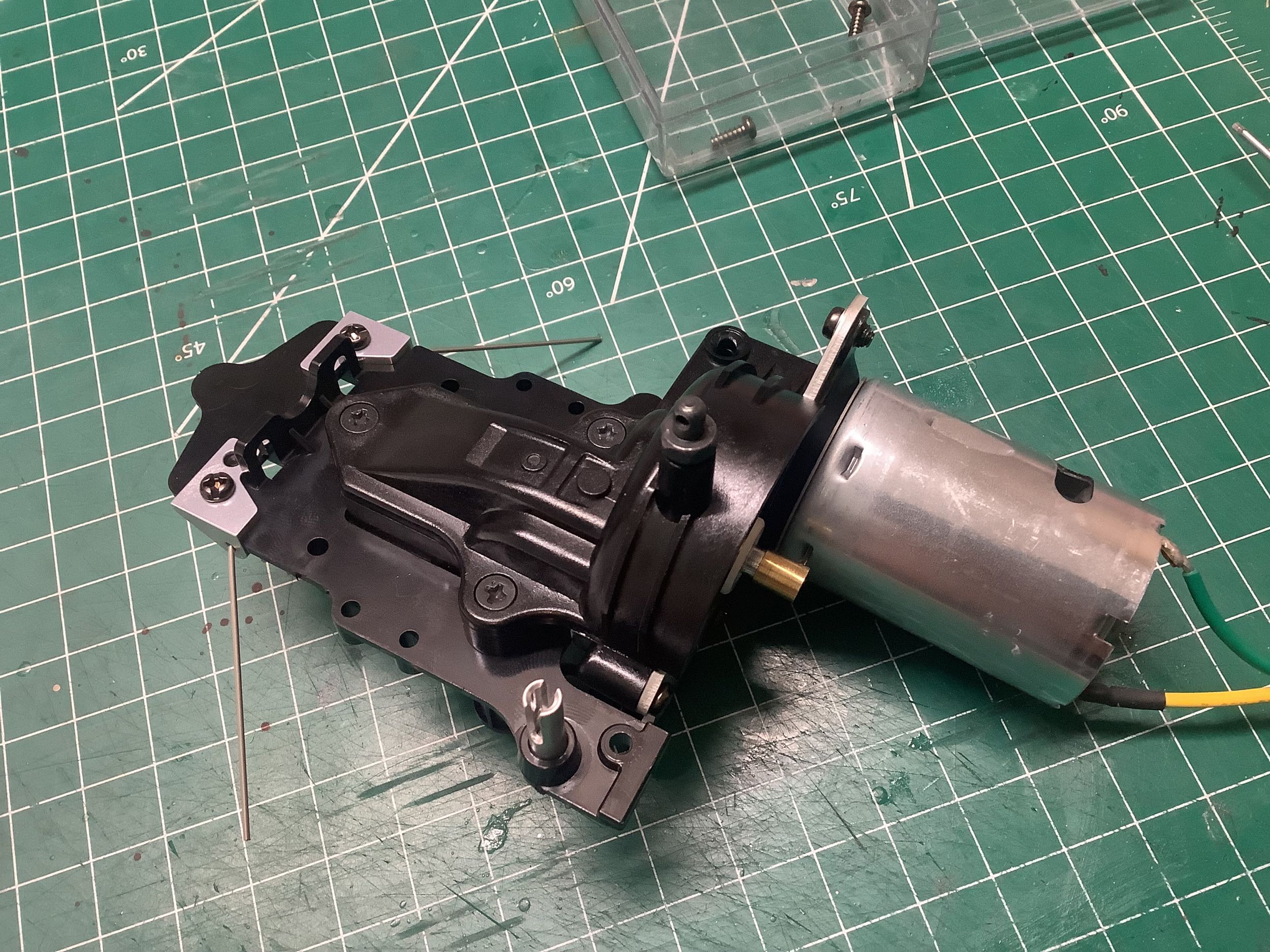
The VQS gearbox is identical to the one from the
Avante except that it uses fewer bearings. The same planetary
front and rear differentials are used, and the same ball center
differential. One minor difference from the original Vanquish is
that the rear propeller joint drives the diff plate with a flattened
section rather than a spline. The silver can motor you see
attached in the image on the right was just a placeholder while I
decided what motor to use. I ended up with a Sport Tuned which
doesn't look much different apart from the label. The plastic
"ring" you see around the gearbox on the right is the infamous part
G11. This function was performed by one of the carbon (or FRP on
the original) chassis plates on the Avante, and is therefore the same
thickness as those were. That's not enough with plastic.
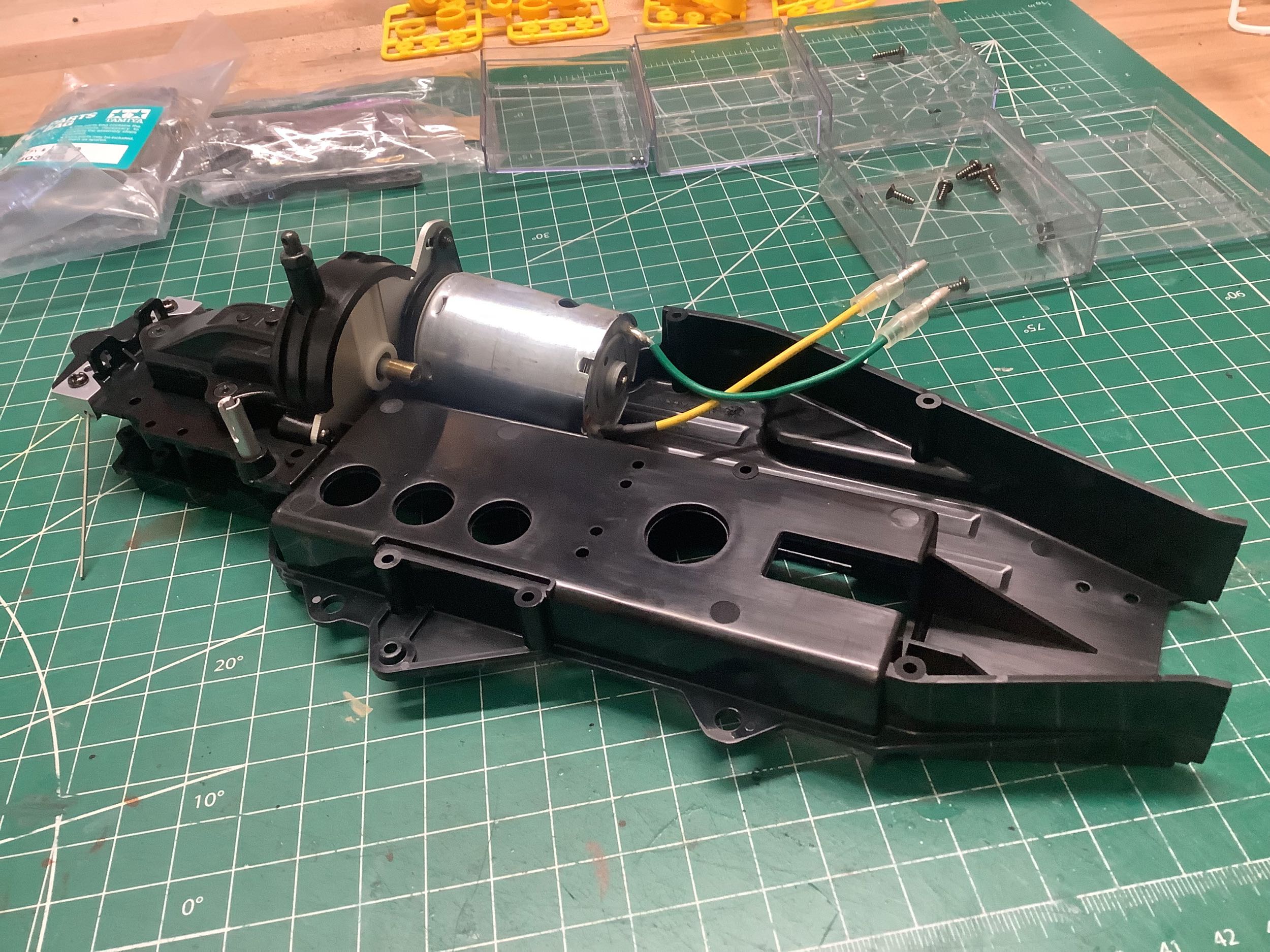
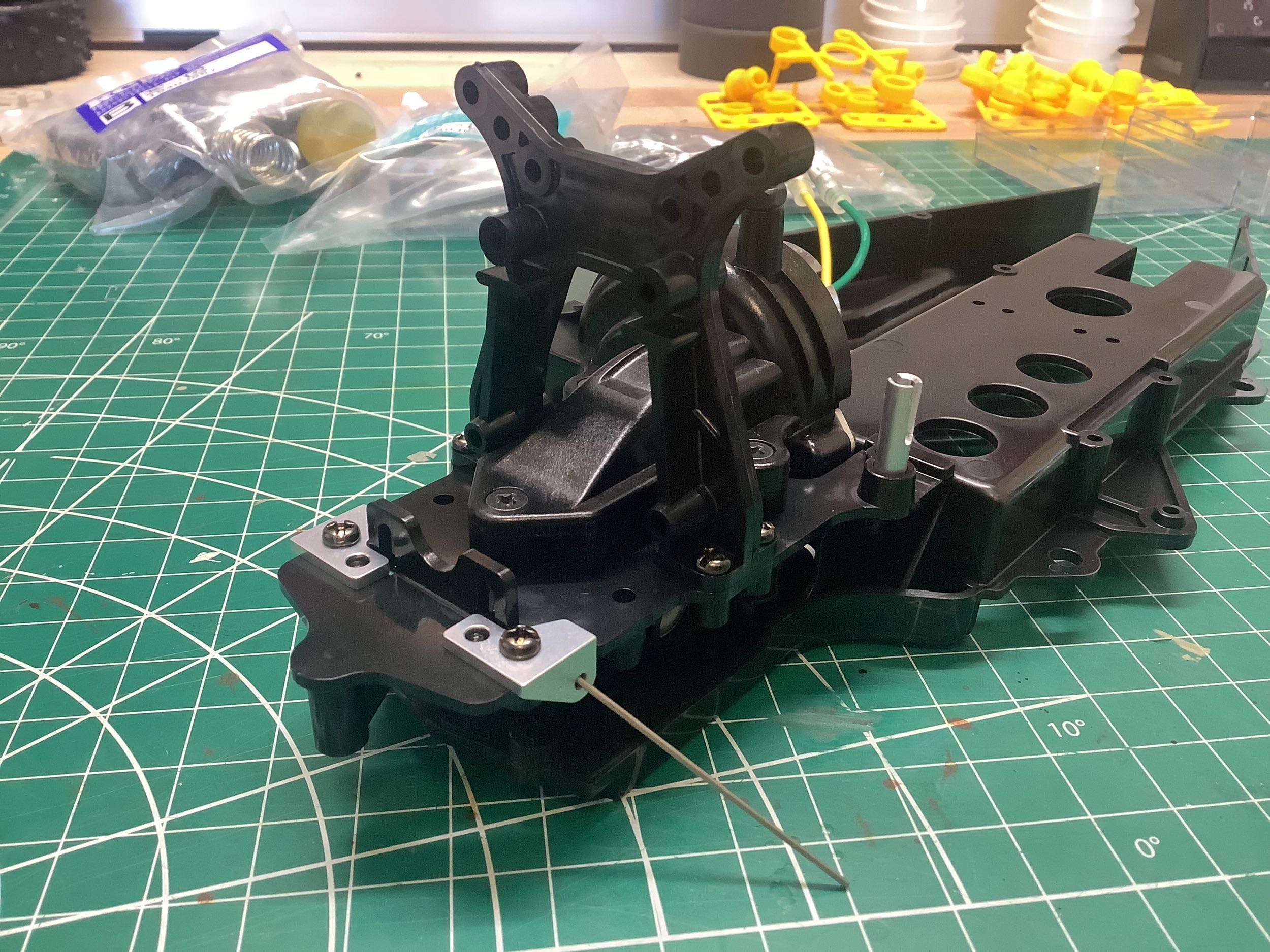
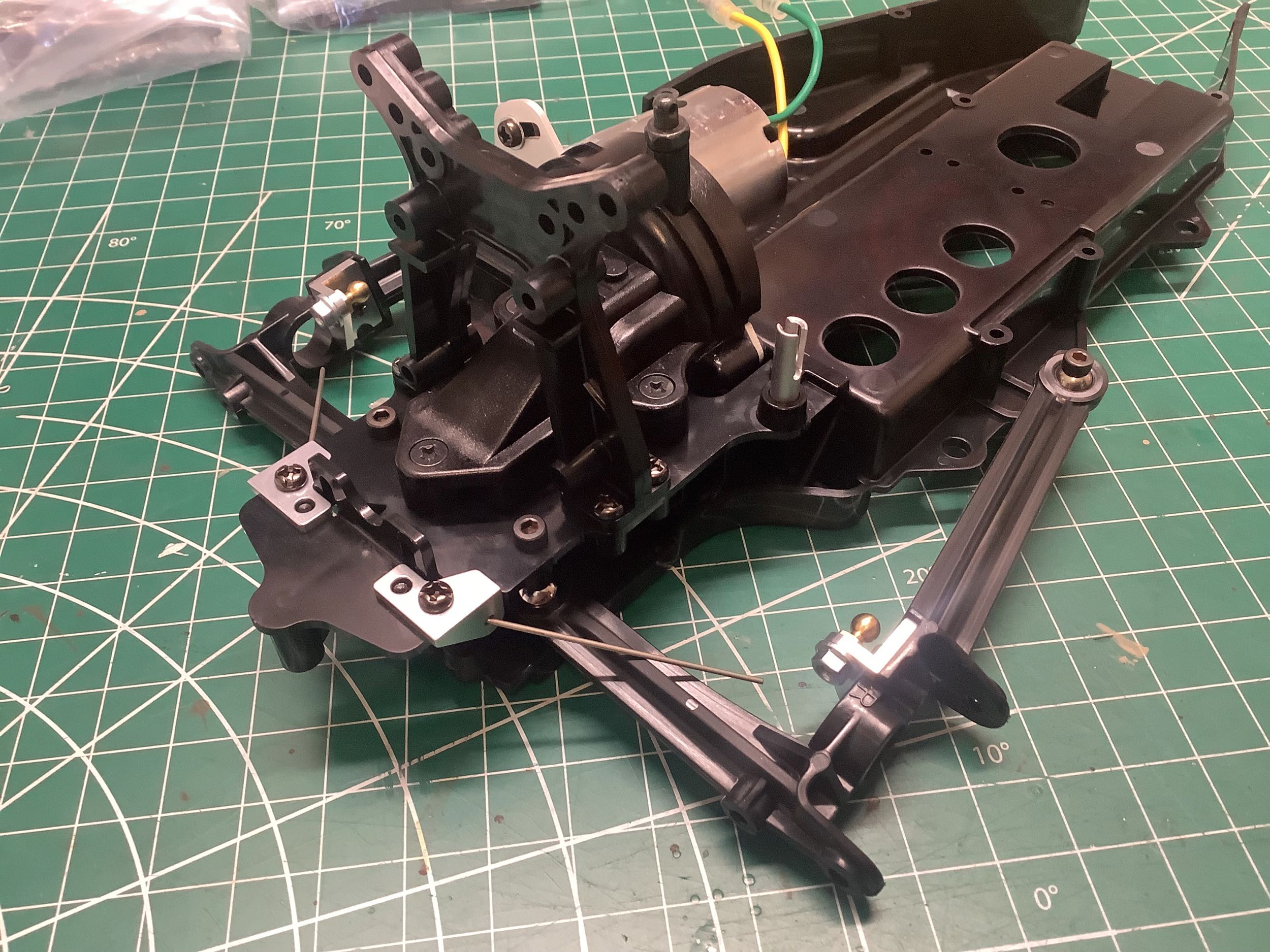
The giant ABS chassis tub is carried over from the
Vanquish to the VQS, but is obviously totally different than the
Avante. Note the molded in battery tray accessible from
underneath. On the right you can see the rear plastic shock
tower. This just screws to part G11 which is a cause of much of
the problem. That tall tower has a lot of leverage to pry on
G11. In the original model, a mechanical speed controlled and
resistor would also have been mounted at this point. This is
another primary difference from the Avante that made the Vanquish
cheaper to equip. The Avante had no space for an MSC and always
needed to use an electronic speed controller like Tamiya's CPR unit.
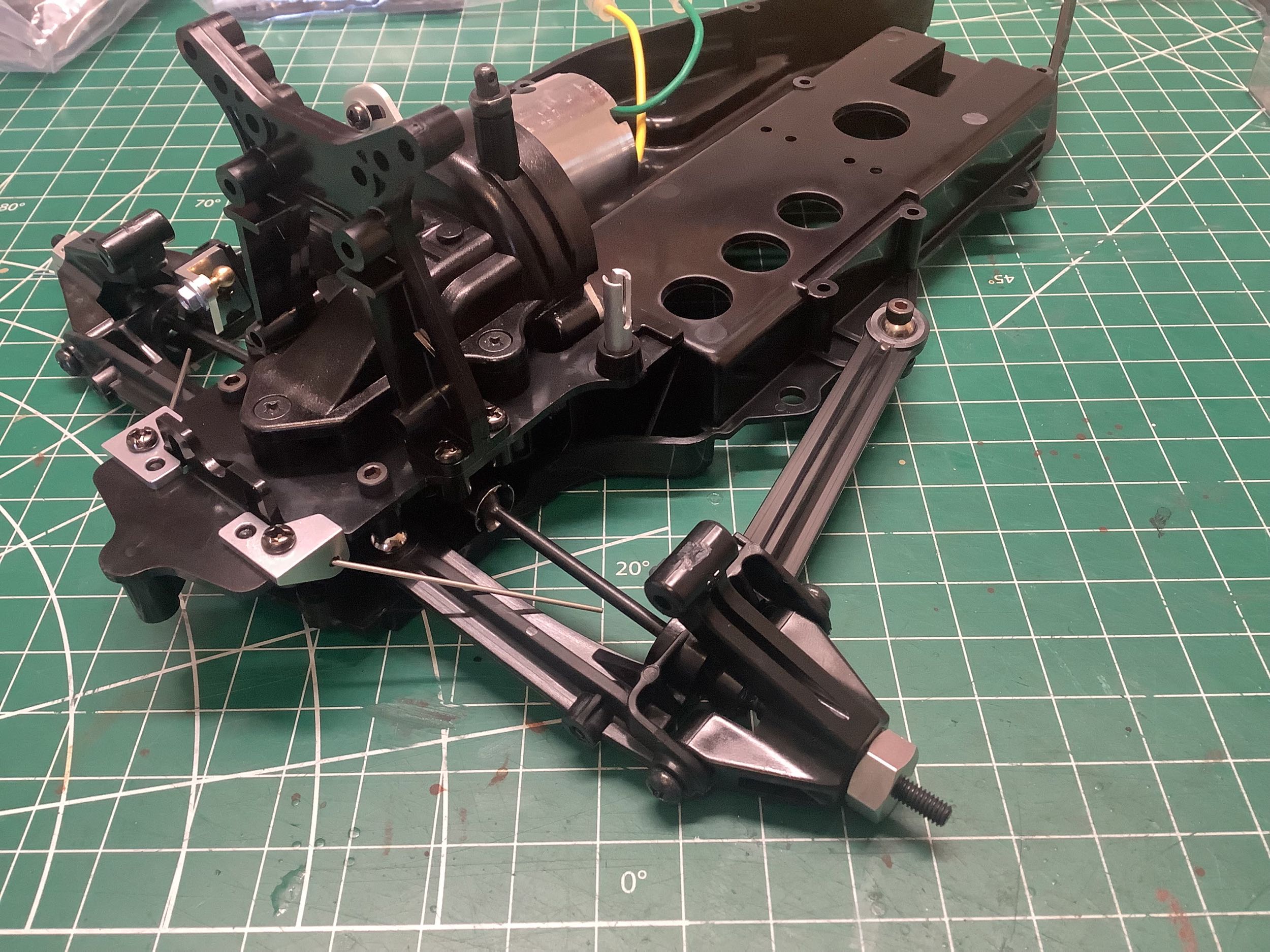
These plastic rear suspension arms are shaped like the
arms from the Avante, but are much simpler and were new for the
Vanquish and carried forward for the VQS. That machined aluminum
part on the inside of the arm is for the shock attachment, and was just
formed sheet metal on the original Vanquish. While The Vanquish
used dog bone axles, the VQS re-uses the nice CVD axles from the Avante
2011. The rear uprights are also the strengthened versions from
the Avante 2011. The wheel axles were originally a spline drive
but now use nice clamping aluminum hexes.
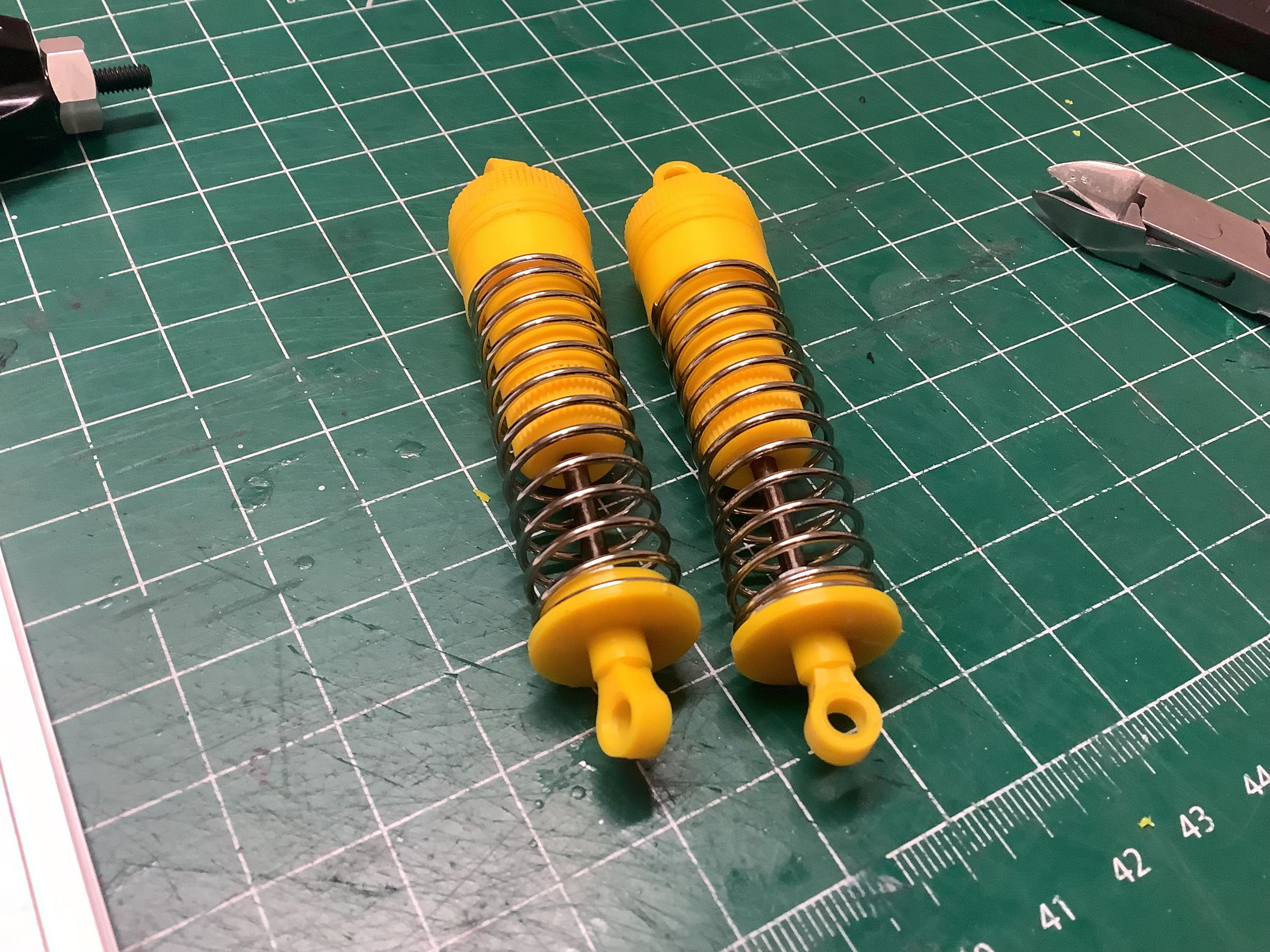
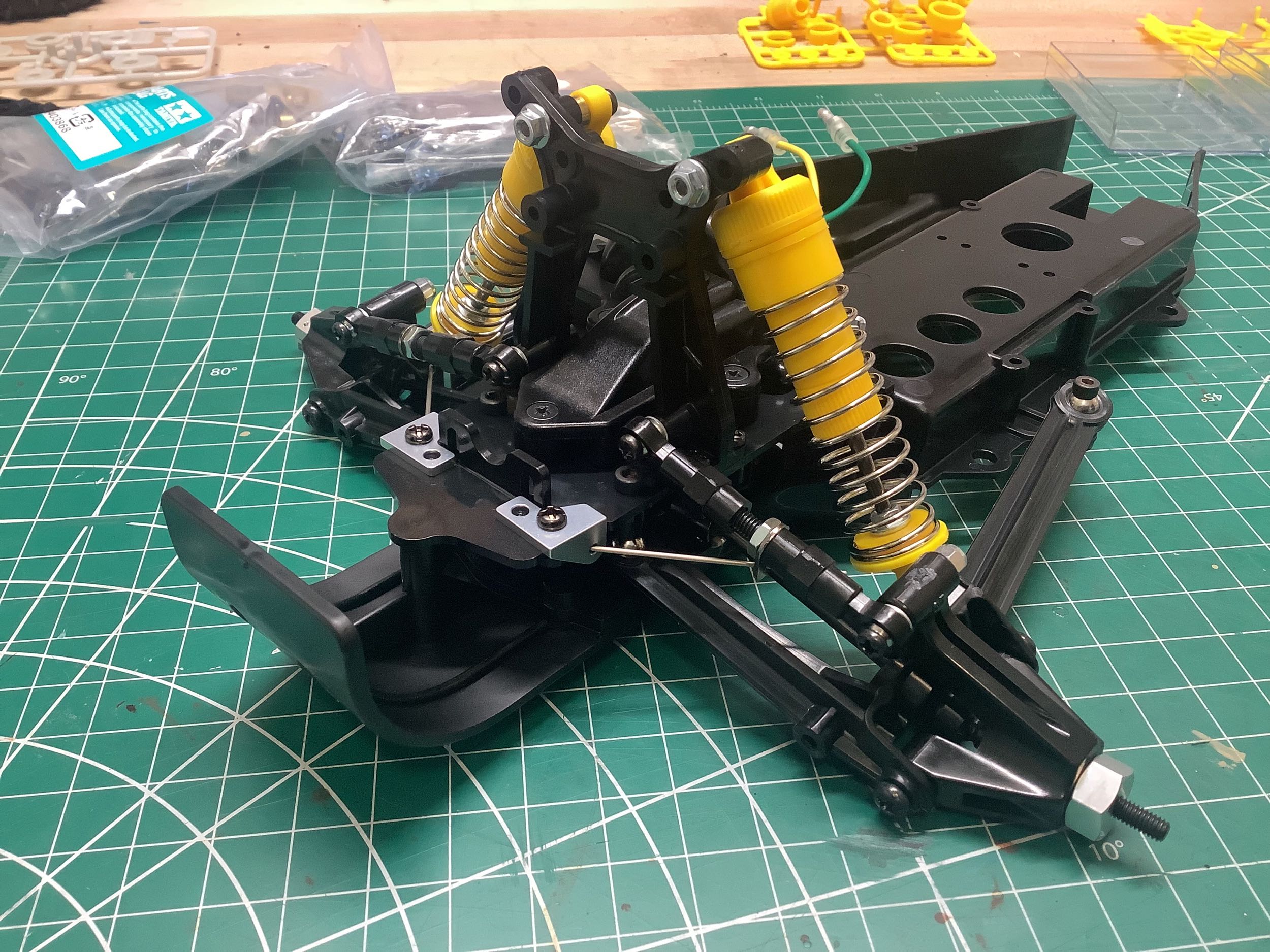
The plastic CVA shocks are well known to anyone who
has built vintage Tamiya models, but they are a great departure from the
aluminum dampers used on the Avante. They don't seem to have been
updated at all for the VQS. Also note the rear bumper which is
more solid than the open version on the Avante. The camber links
now also use much simpler plastic rod ends.
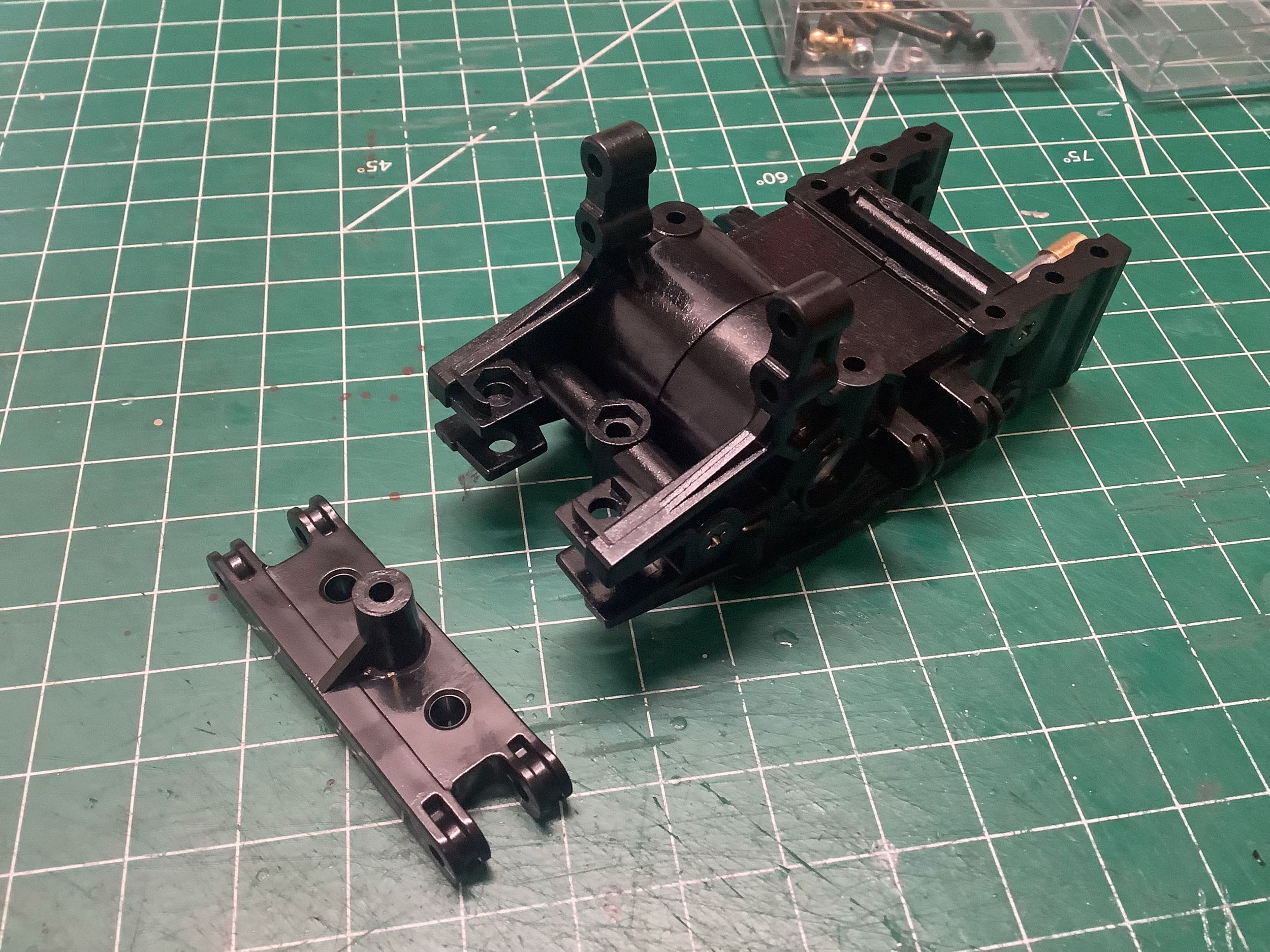
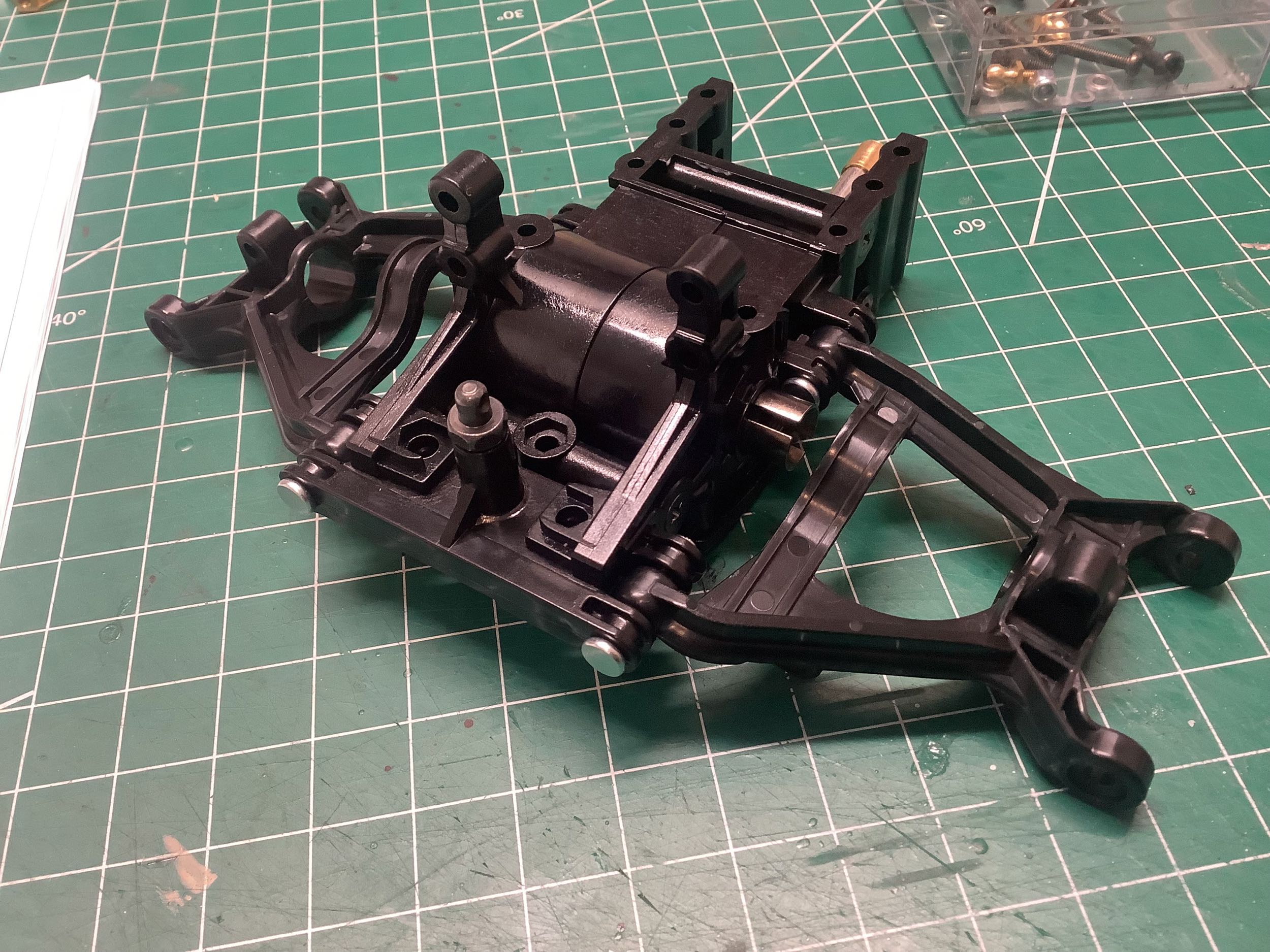
The front gearbox is the same as the Avante, but where the Avante would
have installed the breakaway front suspension mounts here, the Vanquish
switched to a much simpler solid plastic block. The front
suspension arms are also new for the Vanquish and do away with the
complex multi-part assembly from the Avante. These parts are
unchanged on the VQS, but the mold is stamped with the set number from
the Avante 2001 suggesting that the mold was modified at some point and
the re-release uses the latest version. Based on the pictures in
the manuals, it is not obvious what was changed.
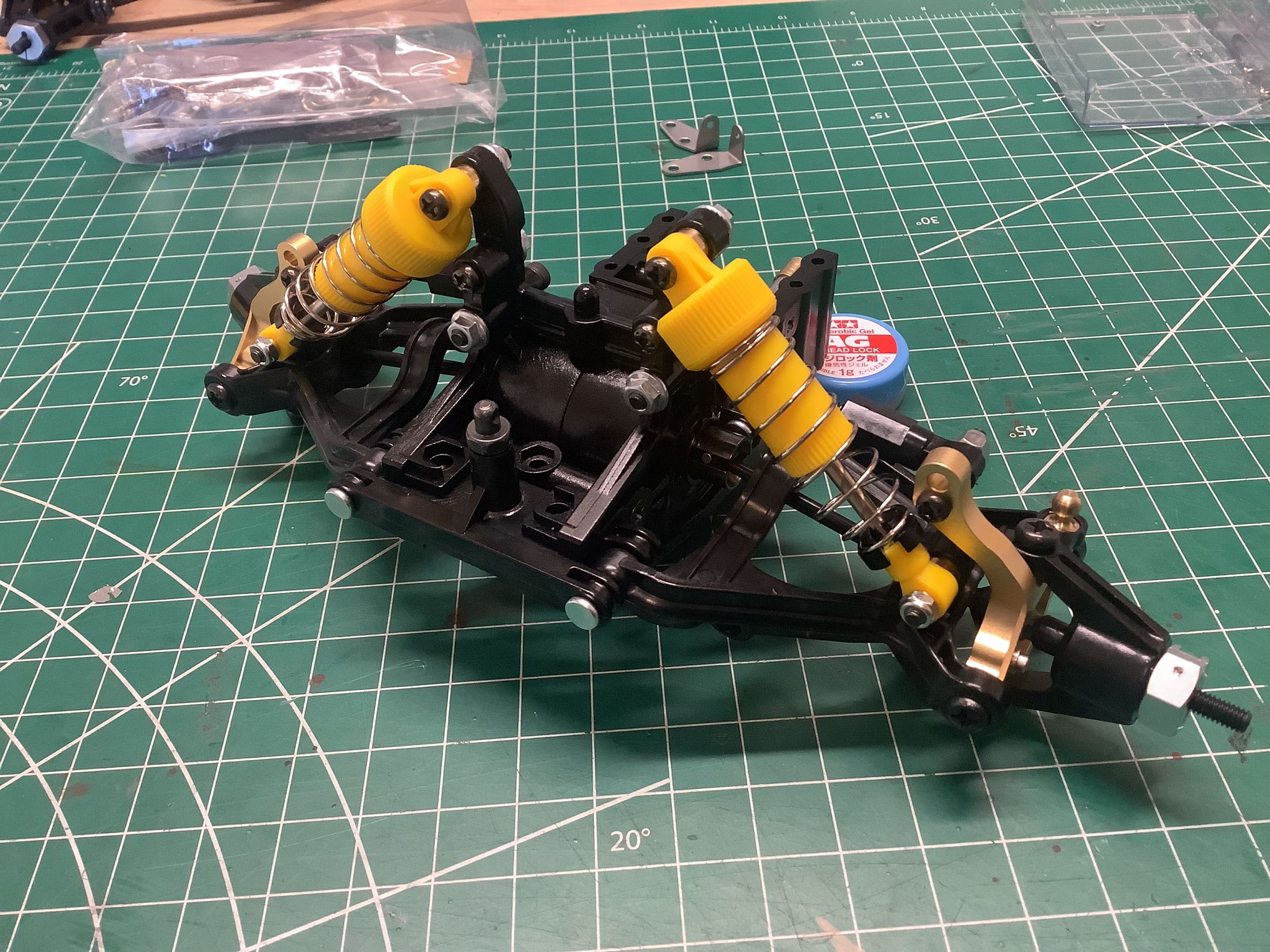
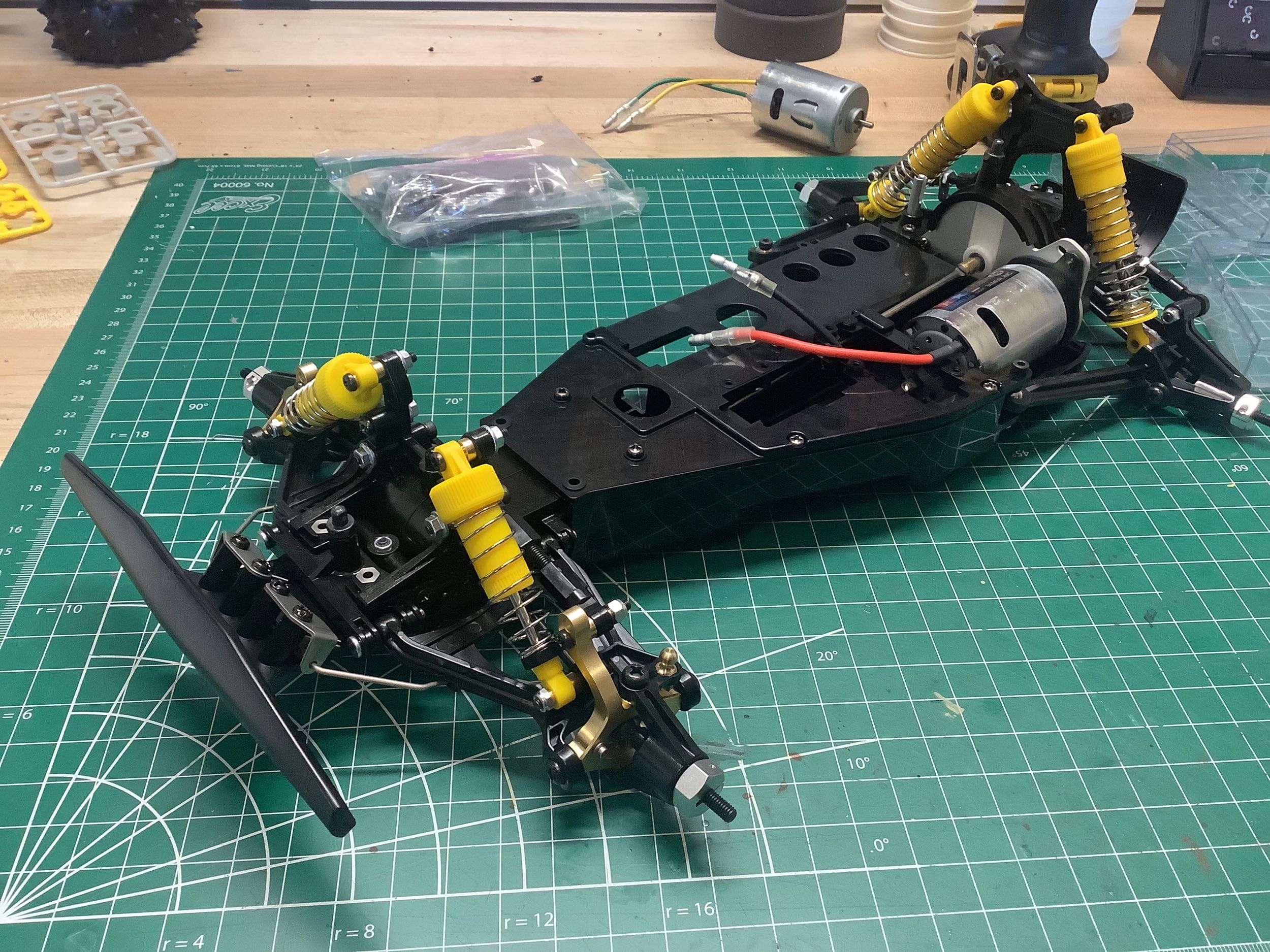
The front shocks are much shorter than used in the rear, but much longer
than those used on the Avante. A taller shock tower has been
added which allows the shocks to be more vertical. The camber
links use plastic rod ends like the rear. The rest of the front
suspension is from the Avante. The original universal axles have
been replaced with CVD axles on the VQS (like the Avante 2001).
The front bumper is wider than the Avante. An upper plastic
chassis cover has also been added.
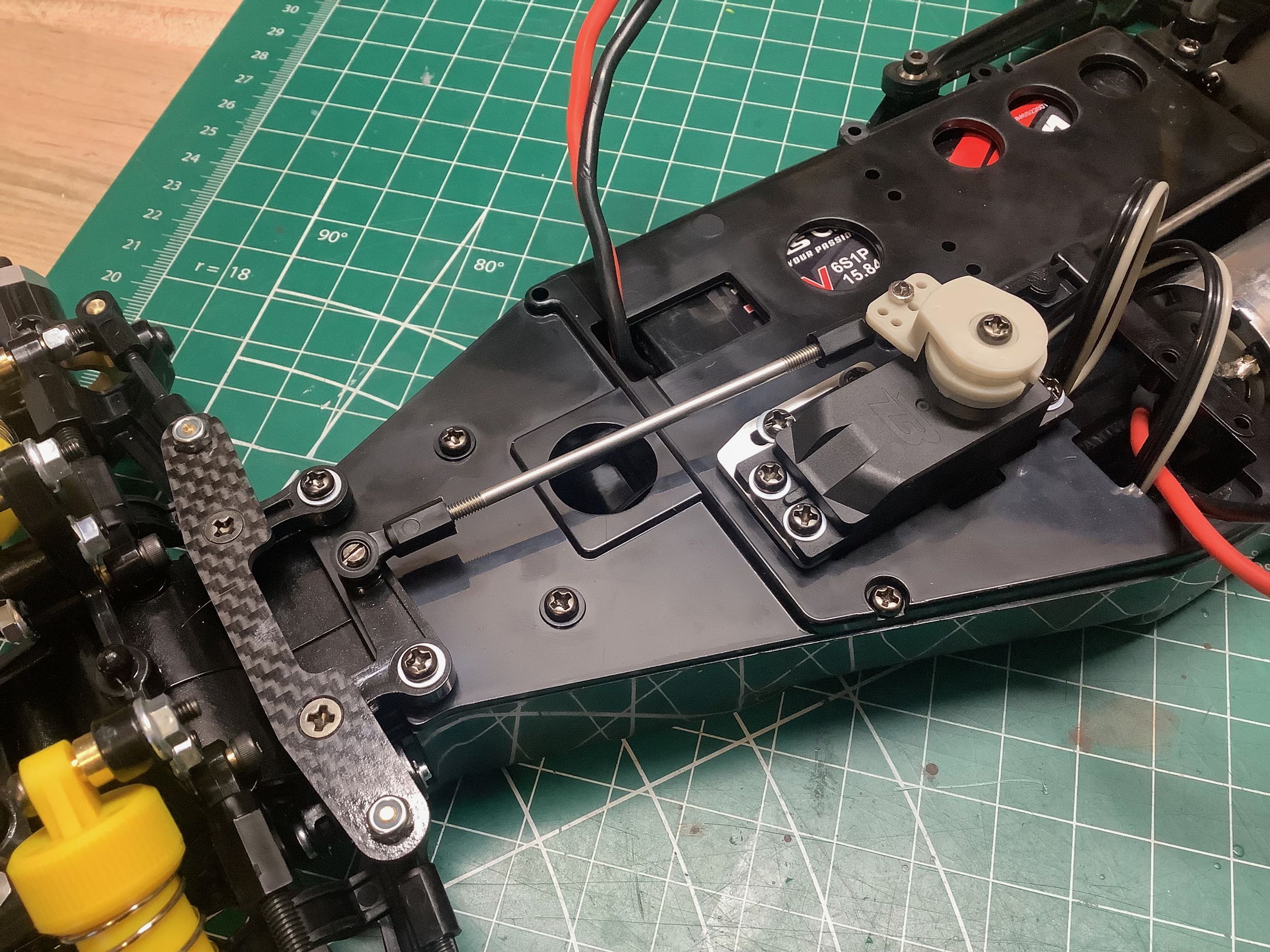
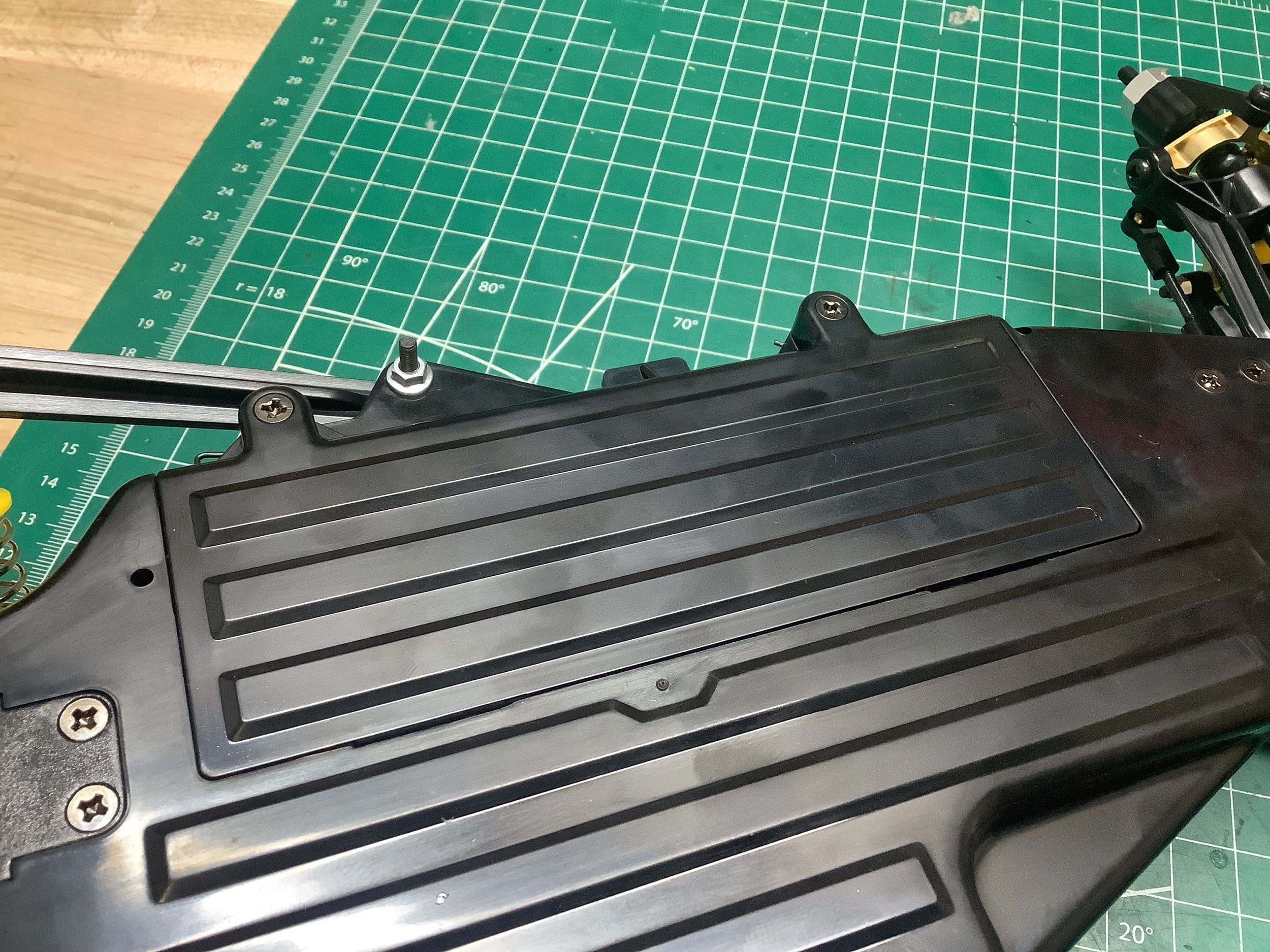
The Vanquish uses a lateral steering system that was
sold as a racing steering upgrade for the Avante. The original
Vanquish used an FRP cross bar while the VQS uses carbon. There's
also a battery cover secured with clips. This implies that the
battery can be installed without taking off the body, but unfortunately
that's not true. You still need to remove the body to get to the
connector.
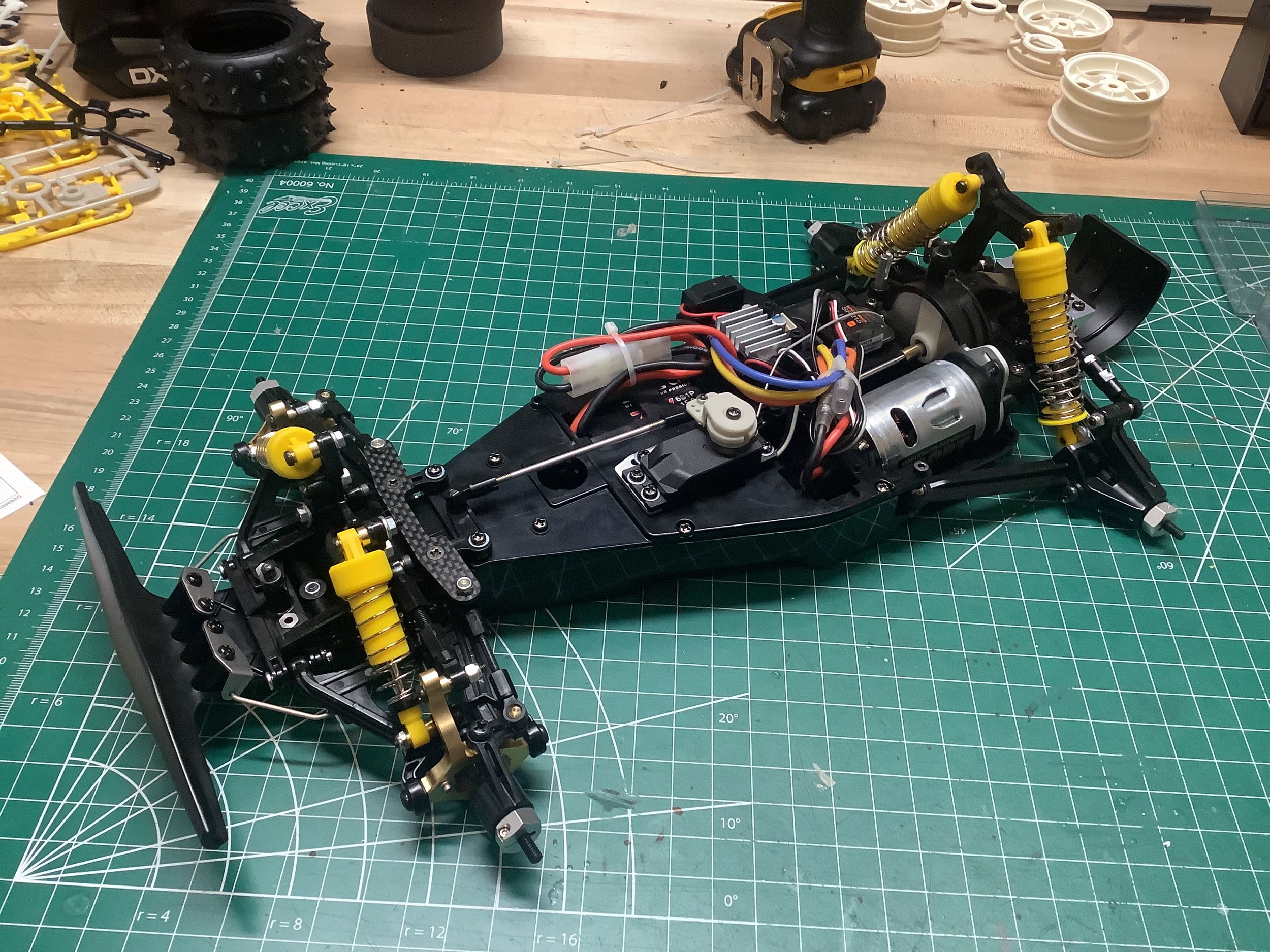
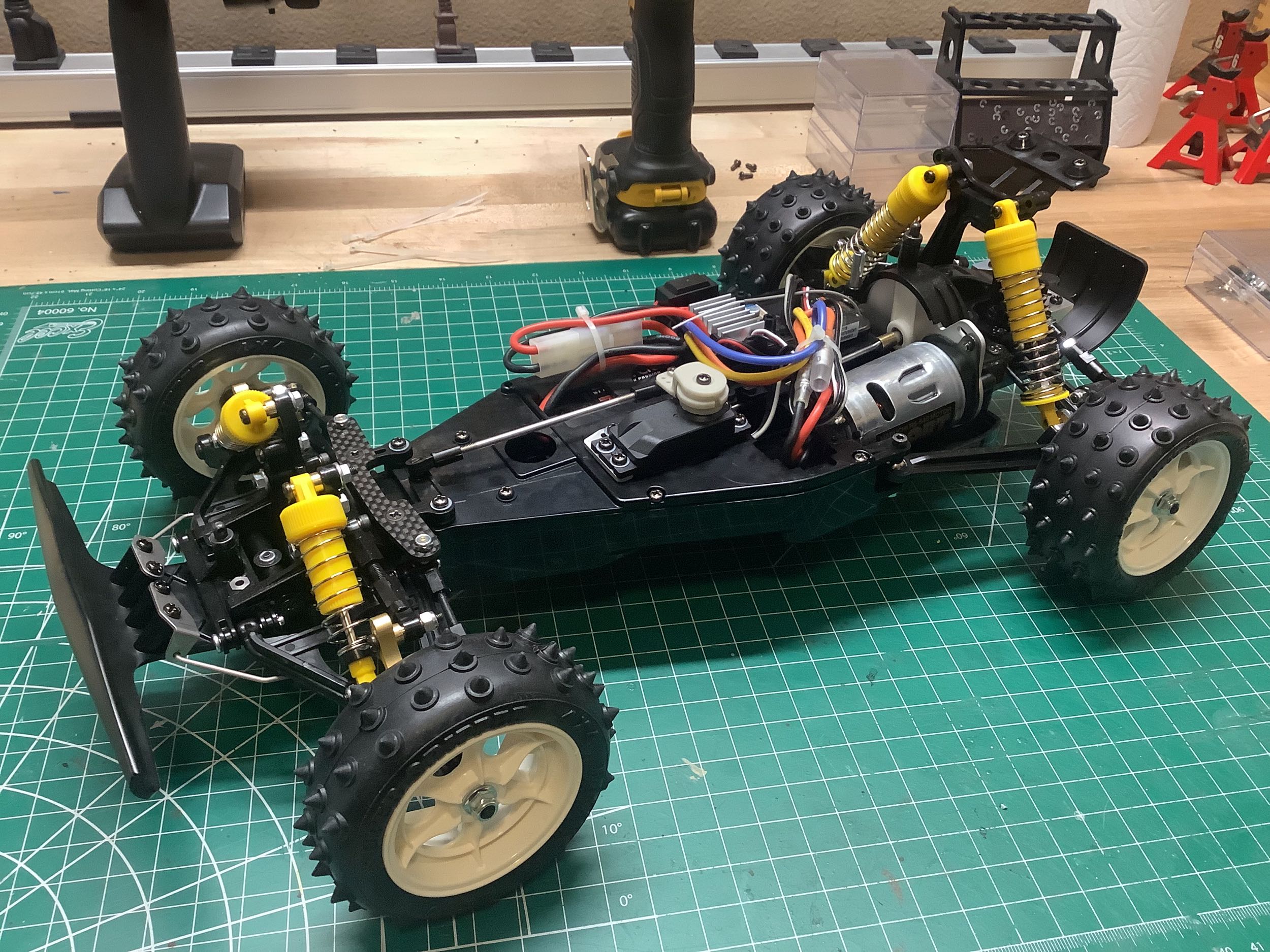
Here's the completed chassis with the electronics installed. On
the right I've added the wheels and tires. The single piece white
wheels were new for the Vanquish and are now driven by a 12mm hex.
The same spiked tires as the Avante are used in the rear, but the
Vanquish uses narrower versions in front.
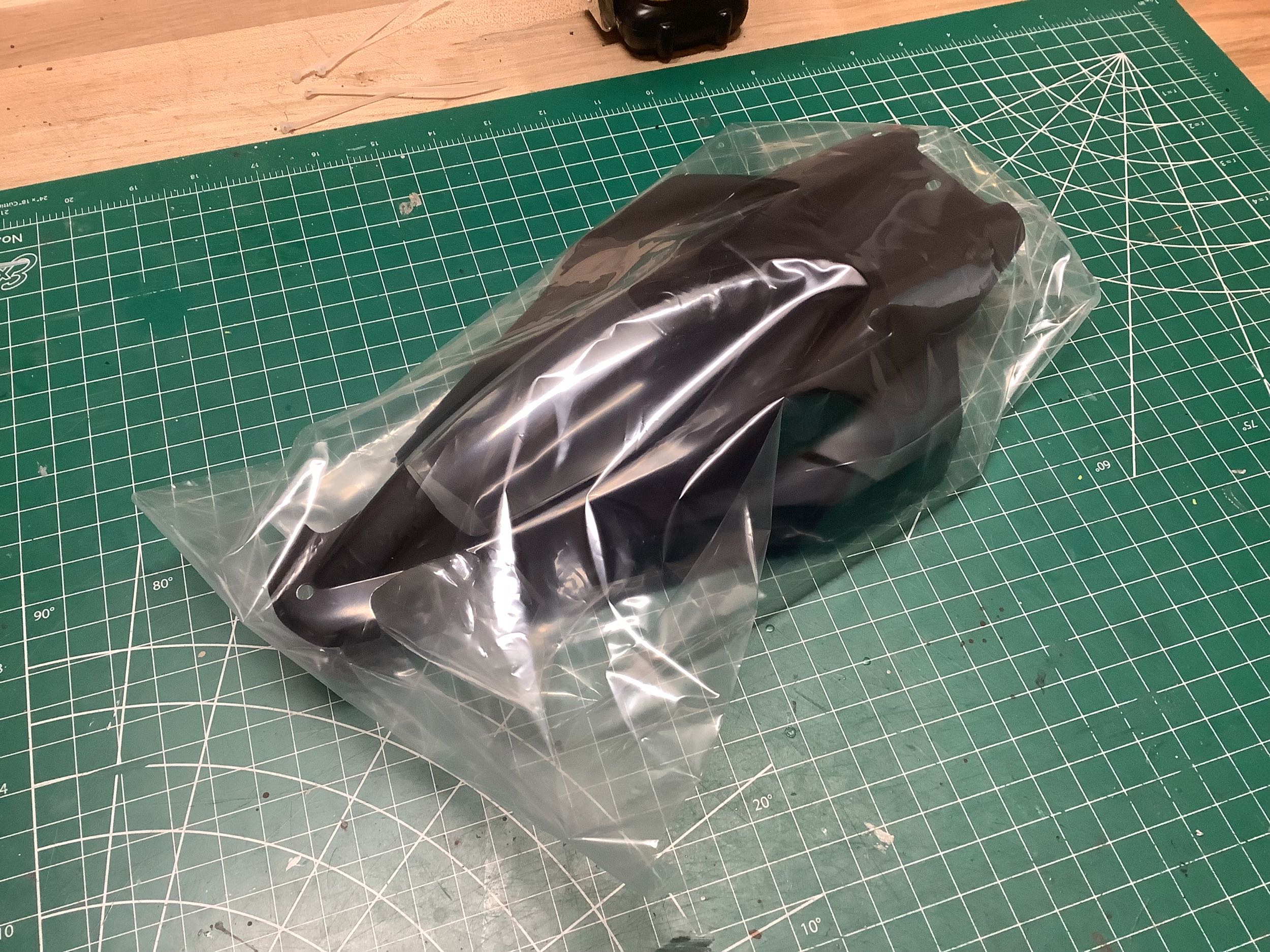
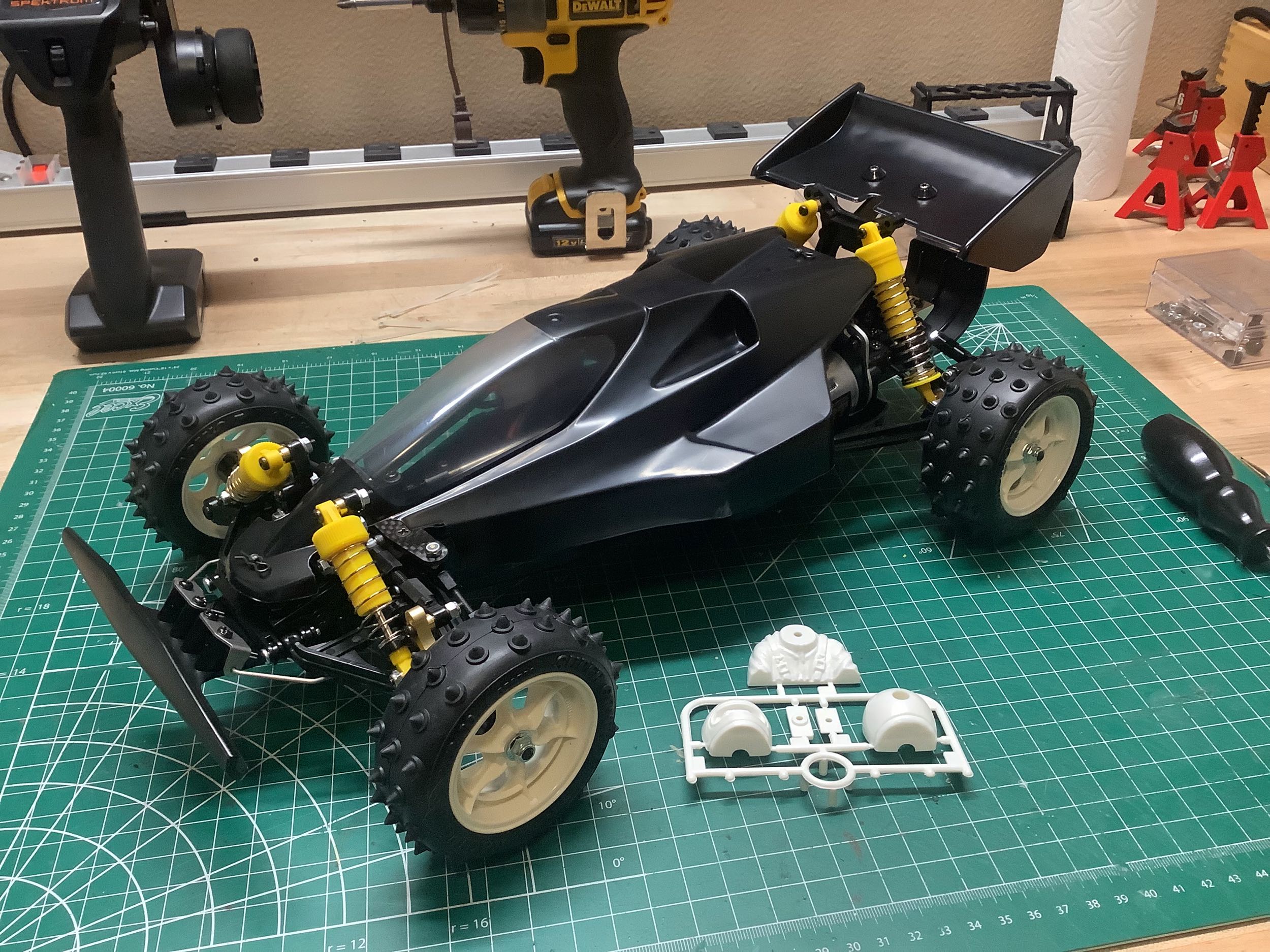
The VQS comes with a painted, trimmed body which can
be quickly tested on the chassis as I've done on the right. The
minimal driver also needs to be painted.